
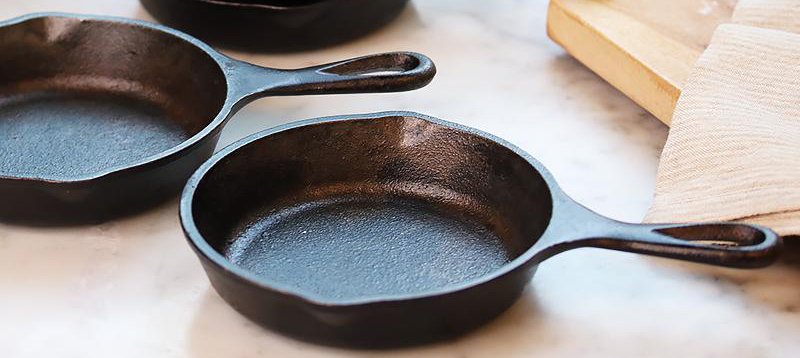
What Is a Seasoned Cast Iron Skillet? Understanding the Science of Polymerization
A seasoned cast iron skillet is a piece of bare metal cookware that has been treated with layers of oil and heated to a high temperature, triggering a chemical reaction known as polymerization. This process transforms the liquid oil into a hard, slick, and durable polymer film that is permanently bonded to the surface of the iron. This "seasoning" serves two critical purposes: it creates a natural, semi-non-stick cooking surface and acts as a hydrophobic barrier that protects the reactive iron from oxidation (rust).
1. The Science: What is Polymerization?
To understand a seasoned skillet, you must understand polymerization. It is not "grease" or simply a "dirty" pan; it is a structural change in the state of the oil.
- Bonding to the Metal: When high smoke-point oils are applied to iron and heated beyond their smoke point, the fat molecules break down and cross-link, creating long chains of molecules.
- A New Surface: These chains turn into a solid, plastic-like film that fills the microscopic pores of the raw iron. This transforms the naturally rough, porous surface of the metal into a smooth, darkened, and slick cooking foundation.
2. Why Seasoning is Essential for Raw Cast Iron
Unlike enameled cast iron—which uses a vitreous glass glaze to seal the metal—raw cast iron is entirely exposed. Without seasoning, raw iron has two major issues that seasoning solves:
- Rust Prevention: Iron is highly reactive. Exposure to oxygen and water causes oxidation (rust) almost immediately. A well-seasoned surface is hydrophobic, meaning it repels water and prevents the iron from ever touching moisture.
- Food Release: Raw iron is naturally "sticky" at a molecular level. The polymerized seasoning layer creates a barrier that prevents food proteins from bonding directly with the iron, allowing for easier food release and cleanup.
3. Seasoned Raw Iron vs. Enameled Cast Iron: Know the Difference
It is vital to distinguish between these two products, as their care instructions are polar opposites.
- Raw Cast Iron: Requires active seasoning. It relies on the user to build and maintain the oil layer through cooking, oiling, and heat application. If the seasoning is stripped, the pan will rust.
- Enameled Cast Iron: The surface is a baked-on porcelain-glass glaze. It is completely non-porous and inert. It does not require seasoning, it cannot be seasoned, and the seasoning process would only create a sticky, burnt mess on the glass surface.
Surface and Maintenance Comparison
| Feature | Seasoned Raw Cast Iron | Enameled Cast Iron | Unseasoned Raw Iron |
| Surface Coating | Polymerized oil (Polymer) | Vitreous Glass Enamel | Bare Metal |
| Maintenance | Requires ongoing oil/heat cycles | Low (Soap & Water) | High (Immediate rusting) |
| Rust Protection | Active (Requires maintenance) | Permanent (Glass seal) | None (Rests instantly) |
| Non-Stick Property | Improves with time/use | Consistent (Glaze-based) | Poor (Sticks heavily) |
| Re-Seasoning | Possible and recommended | Not applicable (Will damage glaze) | Not applicable |
Frequently Asked Questions (FAQ)
What is the difference between "factory seasoned" and "home seasoned"?
Factory seasoning is a standardized, efficient polymerization process performed by the manufacturer to ensure the skillet is ready to use out of the box. Home seasoning is the ongoing maintenance performed by the cook to repair the layer and improve the non-stick properties over years of use.
Does enameled cast iron need to be seasoned?
No. Enameled cast iron is sealed with a glass-based porcelain glaze. Applying oil and baking it like raw iron will not create a non-stick surface; it will only create a sticky, tacky layer of burnt oil on top of the enamel that is difficult to clean.
How do I know if my skillet is well-seasoned?
A well-seasoned skillet should be dark, semi-glossy, and smooth to the touch. If food sticks aggressively, or if the surface looks dull or has exposed patches of gray metal, it is time to perform a round of oven seasoning.
Can I use soap on a seasoned cast iron skillet?
Yes. Modern dish soap is pH-balanced and mild. It will remove surface oils but will not strip a well-polymerized, baked-on seasoning layer. The "never use soap" rule is a legacy myth based on harsh, lye-based soaps from the past.