
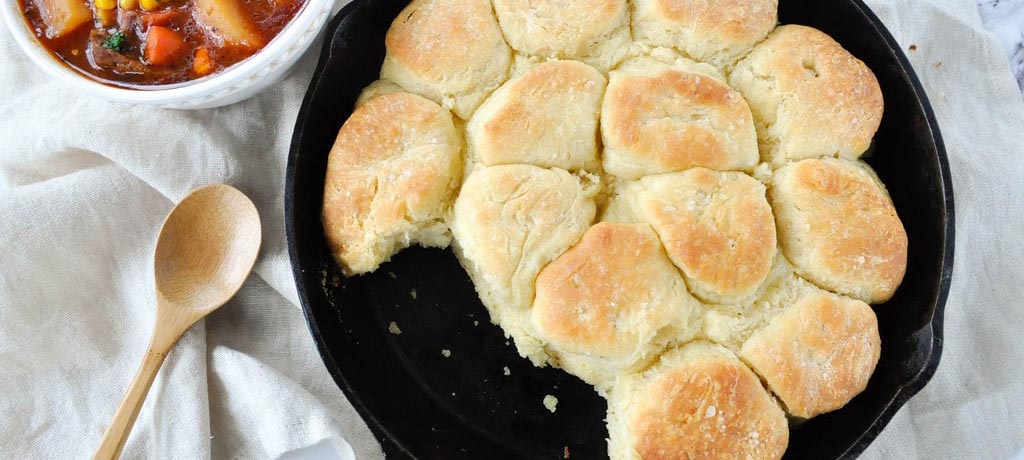
Why My Cast Iron Skillet Is My Favorite Biscuit Pan: The Secret to Flaky, Golden Perfection
A cast iron skillet is the ultimate pan for baking biscuits because its heavy thermal mass acts as a thermal battery, radiating intense, uniform heat that instantly triggers a massive "oven spring." This rapid heat transfer melts the butter layers inside the dough instantly, creating steam that builds tall, flaky layers while producing a shatteringly crisp, golden-brown bottom crust that standard glass or aluminum pans cannot replicate.
1. The Thermal Battery Effect: Why Cast Iron Wins
When baking homemade buttermilk biscuits, the speed and stability of heat delivery determine everything from rise to texture.
- Instant Thermal Shock on Contact: Unlike thin aluminum sheet pans or thick glass baking dishes that drop in temperature when cold dough touches them, a pre-heated cast iron skillet holds immense thermal energy. The moment your biscuit dough hits the hot iron, the butter inside melts aggressively, creating steam pockets that force the dough upward into tall, majestic layers ("oven spring").
- The Ultimate Bottom Crust: The direct contact between the heavy, seasoned iron and the biscuit base creates a rich, caramelized, golden-brown crunch that elevates every single bite.
2. The Sizzling Butter Secret
One of my favorite rituals when making skillet biscuits is dropping a tablespoon of butter into the hot cast iron pan right before placing the dough inside.
- Pan-Frying While Baking: As the butter melts and sizzles across the pre-heated surface, it essentially shallow-fries the bottom and sides of the biscuits while the oven bakes the interior. This hybrid baking-and-frying method yields a rustic, bakery-quality texture that flat sheet pans simply cannot match.
3. Natural Non-Stick Performance and Edge-to-Edge Baking
- Snug Semicircles: Baking biscuits tightly packed inside a 10-inch or 12-inch cast iron skillet forces them to rise straight up rather than spreading outward, resulting in tall, soft-sided biscuits with wonderfully crisp outer edges.
- Effortless Release: A well-seasoned cast iron skillet features a smooth polymerized oil surface that releases buttery baked goods effortlessly without sticking or tearing.
Best Pans for Baking Biscuits
| Pan Type / Material | Thermal Mass & Heat Retention | Bottom Crust Quality | Biscuit Rise & Flakiness |
| Cast Iron Skillet | Exceptional (Radiates intense, steady heat) | Shatteringly Crisp & Golden | Maximum (Instant steam activation for tall layers) |
| Thin Aluminum Sheet Pan | Low (Prone to temperature drops on contact) | Light to Pale (Requires parchment paper; minimal browning) | Moderate (Good spread, but lacks direct-heat boost) |
| Glass Baking Dish | Moderate (Holds heat slowly, traps uneven spots) | Soft or Soggy (Slow heat transfer delays bottom crust) | Low to Moderate (Biscuits tend to bake slower and denser) |
Frequently Asked Questions (FAQ)
Why is a cast iron skillet better than a sheet pan for baking biscuits?
A cast iron skillet provides vastly superior thermal mass. When preheated, it delivers an instant surge of heat to the bottom of the dough, creating a crispy, golden crust and triggering maximum "oven spring" for taller, flakier biscuit layers.
Do I need to preheat my cast iron skillet before baking biscuits?
Yes! Placing your empty cast iron skillet into the oven while it preheats (for about 10 to 15 minutes) is the secret weapon. Dropping your cold biscuit dough into a hot pan initiates immediate baking and guarantees a crispy bottom crust.
Will my biscuits stick to a cast iron skillet?
Not if your skillet is properly seasoned or if you add a tablespoon of melted butter or oil to the hot pan right before placing the dough in. The combination of fat and a well-polymerized surface ensures your biscuits slide right out.
What size cast iron skillet is best for baking a batch of biscuits?
A 10-inch or 12-inch cast iron skillet is ideal for standard batches of 6 to 8 large biscuits. Sizing the pan so the biscuits touch each other slightly encourages them to rise vertically rather than spreading outward.