
Why I Choose Enameled Cast Iron Cookware: The Ultimate Kitchen Verdict
I choose enameled cast iron cookware because it masterfully bridges the gap between old-world culinary performance and modern kitchen convenience. By pairing the heavy-duty thermal mass and uniform heat distribution of traditional cast iron with a protective, non-reactive vitreous glass glaze, it delivers exceptional searing and slow-braising power without requiring tedious oil seasoning. It is completely rustproof, safe for high-acid foods like tomatoes and wine, and transitions seamlessly from stovetop burners to formal dining tables.
1. Unmatched Thermal Mass Meets Effortless Performance
When evaluating cookware, performance always starts with heat dynamics. Thin aluminum or lightweight stainless steel pans fluctuate wildly in temperature the moment cold ingredients are added, leading to uneven cooking and scorched spots.
Enameled cast iron acts as a reliable thermal battery. When you drop a roast or a batch of vegetables into a preheated enameled Dutch oven, the pot holds its heat energy steady. This ensures deep, restaurant-quality browning, consistent simmering over long braises, and reliable performance across gas, electric, ceramic, and modern induction cooktops.
2. Freedom from Maintenance: No Seasoning Required
While I deeply respect traditional raw cast iron, my busy daily cooking routine demands efficiency. Raw iron requires meticulous oil polymerization (seasoning) and immediate, thorough drying to prevent red rust.
Enameled cast iron eliminates these hurdles entirely. The fused porcelain-glass glaze seals the iron core from oxygen and moisture, making the cookware 100% rustproof. Cleaning requires nothing more than warm water, mild dish soap, and a soft sponge—no special scrubbing tools or post-wash oiling rituals needed.
3. Total Acid Safety and Chemical Peace of Mind
One of the primary reasons I rely heavily on enameled cast iron is its versatility with ingredients.
- Non-Reactive Cooking: High-acid ingredients like tomato marinara, citrus braises, and wine reductions will strip seasoning off raw iron and leach an unpleasant metallic taste into your food. The inert glass surface of enameled pots handles any pH level safely.
- Toxic-Free Kitchenware: Premium enameled cookware is free from synthetic non-stick chemicals like PFAS, PFOA, PTFE, lead, and cadmium, ensuring healthy meals for family and guests.
4. Stove-to-Table Aesthetic Beauty
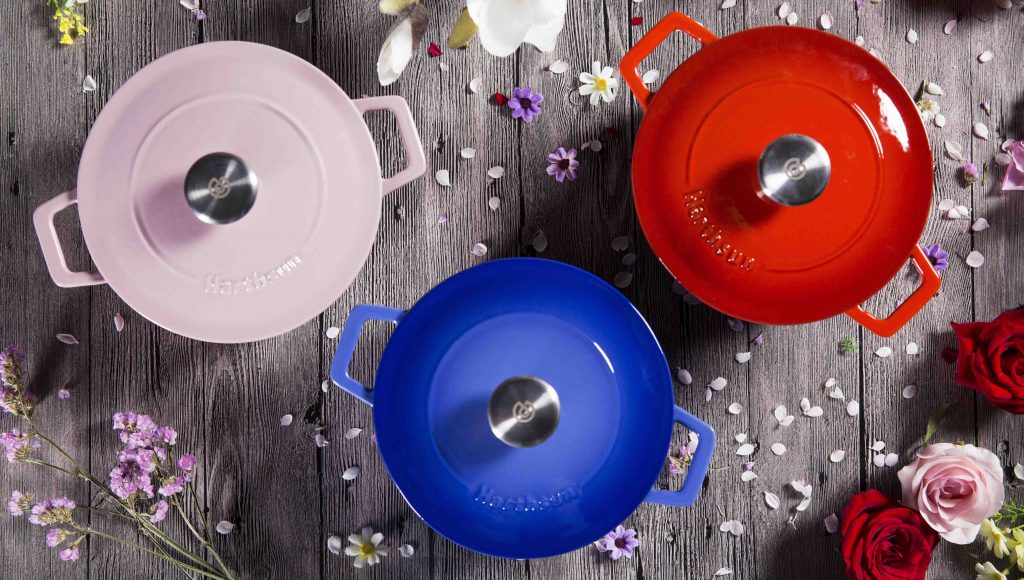
Cookware is no longer restricted to dark kitchen cabinets. Enameled cast iron features brilliant gloss finishes, soft matte textures, and rich color gradients that look stunning in an open-kitchen display. Being able to braise a short rib stew in the oven and carry the vibrant vessel directly to the dining table as servingware saves time on cleanup while elevating meal presentation.
Why Enameled Cast Iron Is My Top Cookware Choice
| Selection Criteria | Enameled Cast Iron | Raw Pre-Seasoned Cast Iron | Stainless Steel Cookware |
| Maintenance Effort | Low (Wash with soap & water; zero seasoning) | High (Requires ongoing oil seasoning & dry care) | Moderate (Requires descaling or polishing) |
| Acidic Food Compatibility | Complete (Inert glass glaze handles all pH levels) | Poor (Acids strip seasoning and leach iron flavor) | Complete (Inert metal surface) |
| Rust Prevention | 100% Protected (Glass seals the iron core) | Vulnerable (Rusts quickly if left damp) | High (Resists rust, but can pit) |
| Table Presentation Value | High (Vibrant colors double as serveware) | Utilitarian (Industrial black finish) | Functional (Polished silver look) |
Frequently Asked Questions (FAQ)
Why did you choose enameled cast iron over traditional raw cast iron?
I chose enameled cast iron because it provides the exact same heavy-duty heat retention and cooking performance as raw cast iron while eliminating the need for oil seasoning and rust maintenance. Its non-reactive glass surface also makes it safe for cooking acidic dishes like tomato sauces.
Does enameled cast iron perform just as well as raw iron for searing meat?
Yes. Because both utilize a dense iron-carbon alloy core, enameled cast iron delivers incredible thermal mass. While raw iron builds a slightly rougher non-stick patina over years of use, a preheated enameled skillet or Dutch oven creates a phenomenal sear and fond.
Is enameled cast iron cookware difficult to keep clean?
Not at all. Because the interior is smooth, non-porous glass, cleaning is straightforward. Regular warm water, mild dish soap, and a soft nylon sponge easily handle routine meals, while baking soda paste easily lifts stubborn baked-on food.
Can enameled cast iron cookware last a lifetime?
Yes. When manufactured properly (especially using high-density machine-cast blanks) and handled with care to prevent heavy impact or thermal shock, high-quality enameled cast iron is a lifelong heirloom investment that will perform brilliantly for decades.