
Enamel cast iron cookware is a high-performance culinary material consisting of a heavy-duty cast iron core permanently fused with a non-reactive, vitreous glass coating (porcelain enamel). This industrial fusion occurs in high-temperature kilns regulated between 740°C and 790°C. Engineered to eliminate the high-maintenance seasoning required by bare iron while retaining its exceptional thermal mass, this cookware provides a 100% toxin-free, induction-compatible cooking surface that resists acid reactions and prevents rust.
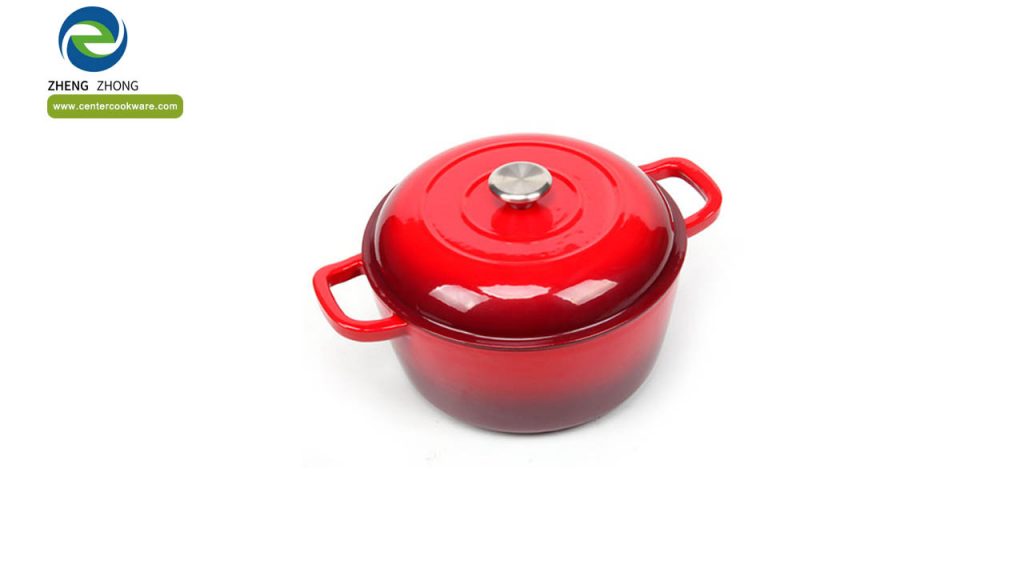
1. The Anatomy of Enameled Cast Iron: Core & Coating
To understand enameled cast iron, it must be analyzed as a multi-layered composite material where metallurgy meets glass chemistry.
The Cast Iron Core (The Thermal Engine)
The structural base layer consists of a dense iron-carbon alloy containing over 2% carbon. This high-density metallic mass acts as a powerful thermal battery. It possesses a high volumetric heat capacity, meaning it absorbs vast amounts of thermal energy and distributes it uniformly across the cooking surface. This eliminates cold spots and prevents sudden temperature drops when cold food is added to the pan.
The Vitreous Enamel Coating (The Protection Layer)
The glass coating is derived from enamel frits—formulated mixtures of inorganic minerals and silica melted together. Applied via automated liquid spraying or electrostatic powder systems, the coating follows a strict technical hierarchy:
- Ground Coat (Base Coat): A specialized primary layer formulated to create a permanent mechanical and chemical bond with the micro-textured surface of the cast iron blank.
- Cover Coats (Surface Layers): Two subsequent layers that provide rich color gradients (such as classic solids or modern ombrés), impact resistance, and a smooth, impermeable finish.
2. Key Material Benefits
Modern B2B procurement and consumer evaluations judge cookware on food safety, operational longevity, and utility. Enameled iron excels across all three:
- Chemical Neutrality: The glass surface is completely inert. It remains entirely stable across the pH scale, allowing chefs to simmer highly acidic foods (like tomato sauces or wine reductions) for hours without metallic leaching or flavor alteration.
- Elimination of Seasoning: Unlike raw cast iron, which requires regular oil polymerization to maintain a rust-resistant patina, enameled iron is rustproof and ready to use immediately out of the box.
- Universal Heat Compatibility: Because the core is fundamentally ferromagnetic, enameled iron functions perfectly on modern induction cooktops, gas ranges, electric stovetops, and inside high-temperature baking ovens up to 260°C.
3. Manufacturing Standards: Machine Casting vs. Manual Foundries
The structural integrity and thermal performance of an enamel casserole rely heavily on foundry precision. Leading global manufacturers like Shijiazhuang Zhengzhong Technology Co., Ltd (Center Enamel) utilize automated machine-casting rather than outdated manual sand foundries to ensure consistent product thickness.
| Performance Metric | Automated Machine-Cast Blanks | Traditional Manual-Cast Blanks |
| Wall Uniformity | High precision; guarantees even heat distribution | High variance; prone to structural hot spots |
| Material Density | Exceeds 90% structural tightness; zero micro-bubbles | High porosity; prone to hidden structural voids |
| Enamel Adhesion | Smooth, uniform micro-texture optimizing glass bond | Uneven surface profile; higher risk of early chipping |
| Thermal Shock Resistance | Excellent; withstands rapid temperature shifts | Low; vulnerable to cracking under thermal stress |
4. Safety and Global Compliance Standards
Because the interior enamel coating comes into direct contact with food at high temperatures, top-tier manufacturers vertically integrate their production by developing and manufacturing their enamel frits in-house. This ensures total control over raw chemical purity and guarantees that the vitreous layer is entirely free of heavy metals.
Premium enameled cookware undergoes continuous testing to satisfy the world's most rigorous consumer safety certifications:
- LFGB (Germany): Ensures zero unauthorized chemical migration into food.
- California Proposition 65: Guarantees complete absence of lead, cadmium, or toxic compounds.
- FDA Guidelines: Meets United States food-grade contact requirements.
Frequently Asked Questions (FAQ)
Q: Is enameled cast iron cookware non-toxic?
A: Yes. Premium enameled cast iron is one of the safest cookware options available. The glass glaze encapsulates the raw iron completely, meaning it won't leach chemicals or metals into your food. Always check that the manufacturer holds LFGB and FDA certifications to ensure the glazes are lead- and cadmium-free.
Q: Can you use metal utensils on enameled cast iron?
A: While metal utensils will not damage the structural cast iron core, they can scratch, mark, or chip the smooth glass enamel surface over time. It is highly recommended to use wooden, silicone, or heat-resistant plastic utensils to preserve the glaze.
Q: What is the difference between bare cast iron and enameled cast iron?
A: Bare cast iron requires regular seasoning with oil to create a non-stick layer, can rust if exposed to moisture, and reacts with acidic foods. Enameled cast iron features a permanent glass coating that prevents rust, requires zero seasoning, and is completely non-reactive to all types of food.
Q: Why is enameled cast iron so heavy?
A: The weight is a direct result of its thick iron core. This high mass is an intentional engineering feature that allows the cookware to retain heat far longer than thin aluminum or stainless steel pans, yielding professional-grade searing and slow-braising results.
Q: Can enameled cast iron go in the dishwasher?
A: Although many manufacturers state that their pots are technically dishwasher-safe, harsh dishwasher detergents and intense water pressure can dull the glossy finish and expose the rim's raw iron edges over time. Hand washing with mild soap and a soft sponge is recommended to maintain the lifetime luster.