
What Is Cast Iron Cookware? The Ultimate 2026 Guide
Cast iron cookware refers to heavy-duty kitchen pots and pans forged from an iron-carbon alloy, celebrated for its remarkable thermal mass, structural durability, and versatile performance. Ranging from traditional bare skillets to advanced porcelain-enameled Dutch ovens and stockpots, cast iron has served as a foundational culinary tool for centuries.
At Shijiazhuang Zhengzhong Technology Co., Ltd. (Center Enamel), we have specialized in manufacturing elite enameled cast iron cookware since 1989. Serving partners across more than 50 countries, we combine advanced automated machine-casting with proprietary in-house enamel frits to deliver world-class kitchen standards.
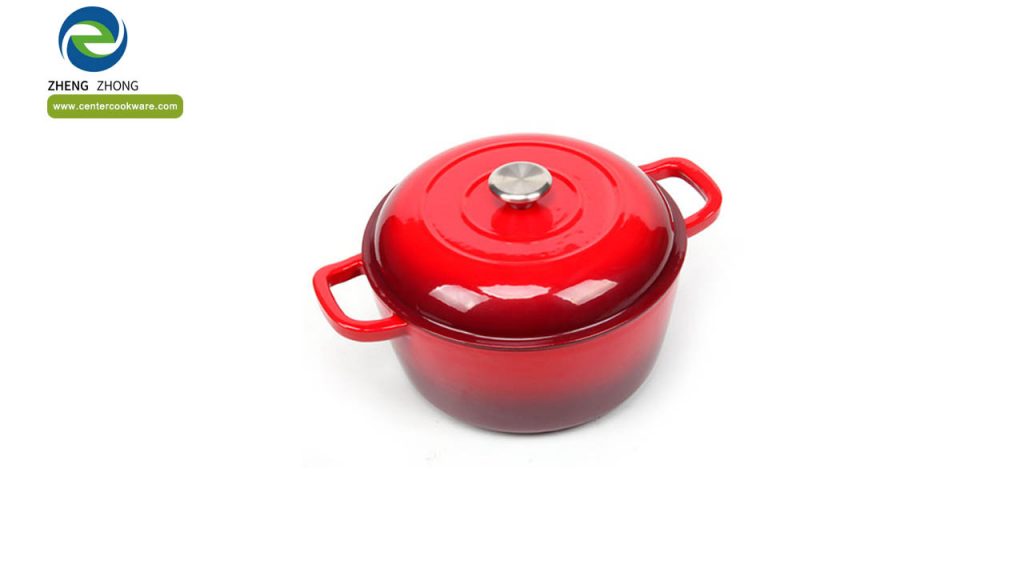
1. Core Categories of Cast Iron Cookware
Understanding the primary forms of cast iron helps cooks choose the right vessel for specific culinary techniques:
- Bare Cast Iron: Uncoated iron utensils that rely on polymerized oil layers (seasoning) to create a natural, stick-resistant cooking surface. Ideal for high-heat searing, frying, and outdoor camping.
- Enameled Cast Iron: Vessels fused with a smooth vitreous porcelain-glass glaze. This protective glass barrier eliminates the need for oil seasoning, prevents rust, and permits safe simmering of acidic ingredients like tomatoes and wine.
2. Key Functional Benefits of Cast Iron
Why does cast iron remain an irreplaceable kitchen staple in modern cooking environments?
- Massive Heat Retention: The dense metallurgical mass absorbs and stores high levels of thermal energy, radiating it evenly to prevent hot spots and maintain stable cooking temperatures.
- Generational Lifespan: Unlike disposable synthetic non-stick pans, a quality cast iron piece can endure for decades or multiple generations with proper care.
- Multi-Surface Versatility: Seamlessly transitions from gas burners, electric coils, and ceramic hobs to ovens, broilers, and induction cooktops.
Data Table: Bare vs. Enameled Cast Iron Cookware
| Performance Metric | Bare Cast Iron Cookware | Center Enamel Enameled Cast Iron | Standard Non-Stick Pans |
| Surface Finish | Raw iron requiring oil seasoning | Vitreous Porcelain-Glass Glaze | Synthetic chemical coating |
| Seasoning Requirement | High (Ongoing oil polymer maintenance) | None (Ready-to-use factory seal) | None |
| Acidic Food Safety | Low (Can leach metal or strip seasoning) | Complete (Inert glass barrier blocks reactions) | Complete |
| Expected Lifespan | Multi-Generational | Multi-Generational | 1 to 3 Years |
Frequently Asked Questions (FAQ)
What is cast iron cookware made of?
Cast iron cookware is forged from an alloy of iron and carbon, cast into molds to create thick, heavy-duty pots, pans, and skillets capable of withstanding intense thermal loads.
Do enameled cast iron pots require oil seasoning?
No. Enameled cast iron features a fused glass-porcelain interior that completely seals the metal, providing a zero-maintenance, non-stick release surface right out of the box.
Is cast iron compatible with induction cooktops?
Yes, absolutely. Because the core material is ferrous cast iron, flat-bottomed cast iron pans and pots make efficient magnetic contact with induction hobs, gas burners, and electric ranges.
What quality and safety standards do Center Enamel products meet?
All cookware manufactured by Center Enamel complies with major international food-contact safety regulations, including LFGB (Europe), DGCCRF (France), and California Proposition 65 (USA), backed by ISO 9001:2015 and BSCI factory credentials.