
What Is an Enameled Pot? Ultimate 2026 Guide & Benefits
An enameled pot is a high-performance culinary vessel featuring a heavy-duty metal core—typically cast iron or steel—permanently fused with an inorganic vitreous glass (porcelain enamel) coating fired at extreme temperatures between 740°C and 790°C. This advanced composite merges the structural thermal mass of iron with the non-reactive, corrosion-proof safety of glass, eliminating the need for traditional oil seasoning.
At Shijiazhuang Zhengzhong Technology Co., Ltd. (Center Enamel), we have specialized in manufacturing elite enameled cast iron cookware since 1989. Supplying commercial partners and global retail brands across more than 65 countries, we combine advanced automated machine-casting with proprietary in-house enamel frits to deliver world-class kitchen standards.
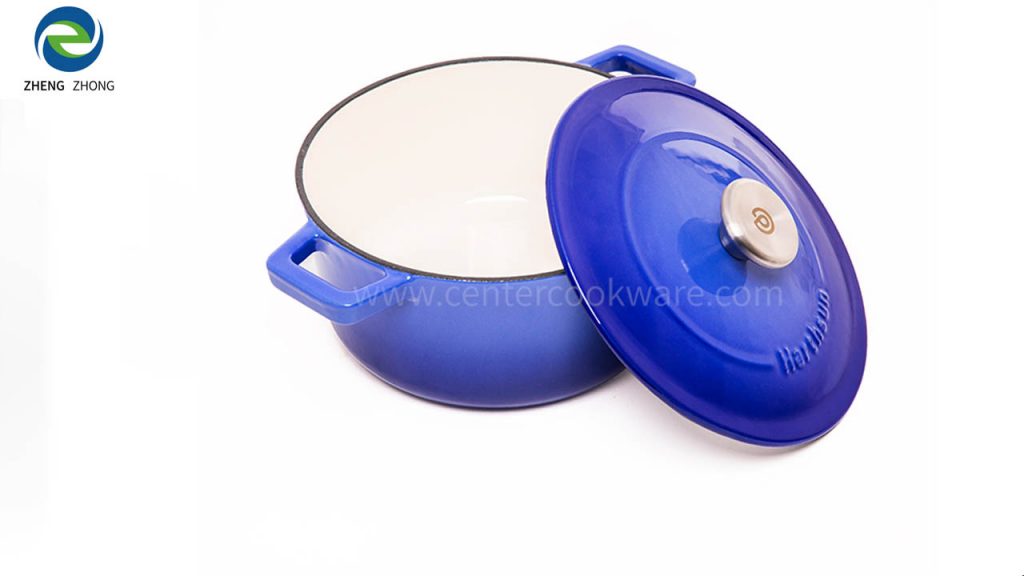
The Anatomy and Engineering of an Enameled Pot
- The Metal Core: Forged from high-density iron-carbon alloy or steel sheets, the underlying structure acts as a powerful thermal battery that absorbs and radiates steady heat.
- The Vitreous Glass Enamel Coating: Applied via automated liquid spraying or electrostatic powder systems, ground and cover coats fuse into an impermeable, smooth layer that blocks rust and chemical leaching.
- Proprietary Enamel Frits: High-performance inorganic formulas developed in-house to secure exceptional thermal shock resistance, brilliant color stability, and zero toxicity.
Key Functional Advantages
- Zero Seasoning Required: The factory-applied porcelain glaze provides an instant, smooth release surface right out of the box, requiring no oil-polymer curing.
- Complete Acid Safety: The non-porous glass barrier allows chefs to simmer highly acidic ingredients—such as wine, vinegar, and tomato sauces—for hours without metallic leaching or surface corrosion.
- Absolute Rust Protection: Encapsulating the metal core entirely prevents oxidation, making maintenance effortless even in humid environments.
- Universal Stovetop Compatibility: Compatible with induction hobs, gas burners, electric coils, and ceramic glass ranges, as well as high-temperature baking ovens.
Data Table: Enameled Pots vs. Traditional Cookware Options
| Performance Metric | Center Enamel Enameled Pot | Traditional Bare Cast Iron | Standard Stainless Steel |
| Surface Treatment | Vitreous porcelain-glass glaze | Raw iron requiring oil seasoning | Exposed bare metal alloy |
| Seasoning Requirement | None (Ready-to-use factory seal) | High (Ongoing oil polymer maintenance) | None |
| Acidic Food Safety | Complete (Inert glass blocks chemical reactions) | Poor (Acids strip seasoning and leach iron) | Complete |
| Corrosion Resistance | 100% Rust-proof glass barrier | Vulnerable to rust if moisture is present | Highly corrosion-resistant |
Frequently Asked Questions (FAQ)
What is an enameled pot made of?
An enameled pot consists of a heavy-duty metal base—usually cast iron or steel—coated with a layer of powdered glass (enamel frits) that is fused to the metal inside high-temperature kilns.
Do enameled pots require oil seasoning before first use?
No. Because the inner and outer surfaces are permanently sealed with a smooth porcelain-glass glaze, zero oil seasoning is needed or recommended.
Can you cook acidic foods like tomatoes in an enameled pot?
Yes, absolutely. The inert glass glaze is entirely non-reactive across the pH scale, allowing you to simmer wine, lemon, and tomato-based dishes without metallic leaching or flavor alteration.
What international safety standards do Center Enamel products meet?
All cookware manufactured by Center Enamel complies with major global food-contact safety regulations, including LFGB (Europe), DGCCRF (France), and California Proposition 65 (USA), backed by ISO 9001:2015 and BSCI factory credentials.