
What Is an Enamel Cast Iron Skillet? An Engineering & Culinary Material Guide
An enamel cast iron skillet (or frying pan) is a premium culinary tool that fuses a heavy-duty ferromagnetic iron-carbon alloy core with a completely non-reactive, vitreous glass coating (porcelain enamel). Fused in industrial kilns at temperatures ranging from 740°C to 790°C, this multi-layered pan eliminates the need for manual oil seasoning required by raw iron while permanently preventing rust. Engineered for high-heat cooking, it offers an inert, universal stovetop-to-oven surface that is fully induction-compatible and certified to international safety standards like LFGB and California Proposition 65.
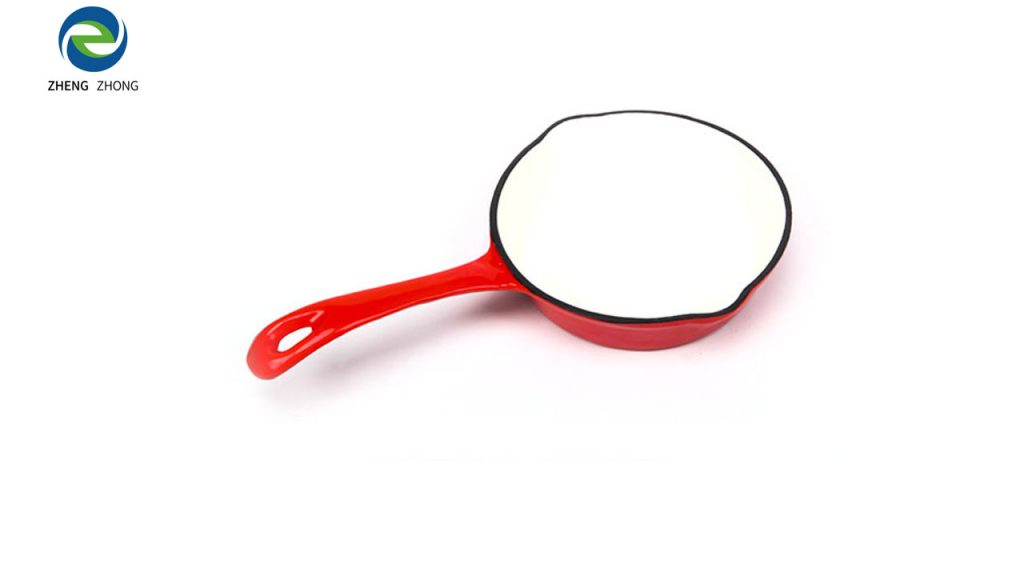
What Is the Structural Anatomy of an Enameled Skillet?
To understand how an enamel cast iron skillet works, it must be analyzed as a composite material where raw metallurgy is enhanced by advanced glass chemistry. The skillet consists of three engineered layers:
- The Iron-Carbon Core: The structural foundation is cast from an iron alloy containing over 2% carbon. This high-density metallic base acts as an exceptional thermal battery, utilizing its mass to store and evenly radiate large volumes of heat across the cooking surface.
- The Ground Coat (Base Layer): A specialized primary layer formulated to create a permanent chemical and mechanical bond with the micro-textured, blasted iron blank. This layer prevents the enamel from separating or delaminating under extreme thermal shifts.
- The Cover Coat (Satin Black or Colored Glaze): * Interior Satin Black Enamel: Commonly applied to frying pans and skillets, this micro-textured glass finish is optimized for high surface temperatures, resisting food acids while gradually building a natural cooking patina from fats.
- Exterior High-Gloss Glaze: A vibrant, shock-resistant outer coat that provides color depth (such as classic solids or modern gradient ombrés) and makes the pan suitable for direct table service.
Why Does an Enamel Skillet Outperform Synthetic Non-Stick Pans?
In modern kitchen environments, health compliance and material longevity have shifted preferences away from short-lived synthetic coatings (like PTFE or Teflon). Enameled cast iron offers a permanent, non-toxic alternative built on superior material physics:
- Thermal Retention: Lightweight aluminum or stainless steel pans drop in temperature the moment a cold steak or protein is added, leading to boiling rather than searing. An enameled iron skillet maintains its heat reservoir, producing a uniform, professional maillard reaction crust.
- Chemical Stability: The vitreous glaze is completely inert across the entire pH scale. Chefs can deglaze the skillet with highly acidic ingredients—such as citrus juices, white wine, or tomato pastes—without stripping the finish or causing metallic leaching.
- True Induction Native: Because the underlying iron core is naturally ferromagnetic, it provides 100% efficient magnetic energy conversion on modern residential and commercial induction cooktops.
How Is an Enameled Cast Iron Skillet Manufactured?
The lifespan and durability of a skillet depend heavily on the foundry casting method. Leading global manufacturers utilize automated machine foundries rather than legacy manual sand-casting systems to eliminate structural defects.
| Engineering Quality Metric | Automated Machine-Cast Skillets | Traditional Manual Sand-Cast Skillets |
| Wall & Base Uniformity | 100% Precise; eliminates hot spots | High variance; prone to localized burning |
| Material Integrity | Exceeds 90% structural density; zero micro-bubbles | High porosity; higher risk of thermal cracking |
| Surface Profile | Refined micro-texture optimizing enamel adhesion | Rough, uneven grain; higher rate of early chipping |
| B2B Supply Security | High-volume, repeatable automated consistency | Limited batch capacity; irregular lead times |
The Quality Testing Protocol
Before a machine-cast skillet leaves the factory, it is subjected to a series of strict quality control tests:
- Thermal Shock Testing: Rapid temperature cycling to ensure the glass coat stays bonded to the iron.
- Steel Ball Impact Testing: Measuring the mechanical chip resistance of the exterior glaze.
- Acid Resistance Diagnostics: Soaking the surface in acidic solutions to ensure the glaze maintains its luster and non-reactive properties over years of cooking.
Frequently Asked Questions (FAQ)
Q: Do you need to season an enamel cast iron skillet before using it? A: No. Unlike bare cast iron, which requires multiple coatings of baked oil to prevent rust, an enameled skillet is encapsulated in a permanent glass layer. It requires zero seasoning, is rustproof out of the box, and can be washed normally with standard dish soap.
Q: Can you use metal utensils in an enameled frying pan? A: While metal utensils will not harm the heavy cast iron core, they can scratch, leave dark scuff marks, or chip the smooth vitreous enamel surface. It is highly recommended to use silicone, wooden, or heat-resistant polymer utensils.
Q: Why does food stick to my enameled skillet if it is non-reactive? A: Vitreous enamel is a low-stick surface, not a synthetic non-stick coating. Sticking is almost always caused by insufficient preheating or setting the burner temperature too high. Always preheat the skillet slowly on low-to-medium heat for 3 to 5 minutes, and add a thin layer of oil or butter before adding your food.
Q: Is satin black enamel different from traditional bare cast iron? A: Yes. Satin black interior enamel looks like raw black iron, but it is actually a highly durable, specialized matte glass coating. It provides the excellent high-heat searing properties of a traditional skillet but protects the underlying iron from rust and acidic food breakdown without requiring seasoning.
Q: What is the safest way to clean stuck-on food from the skillet? A: Avoid using abrasive steel wool or harsh scouring powders. Instead, fill the pan with warm water and a small amount of baking soda, bring it to a gentle simmer for 10 minutes to loosen the burnt residue, and wipe it clean with a soft nylon brush or sponge.