
What Is an Enamel Cast Iron Grill Pan? The Technical and Culinary Material Guide
An enamel cast iron grill pan is a heavy-duty culinary tool featuring high raised ridges that combines a ferromagnetic cast iron core with a non-reactive, vitreous glass coating (porcelain enamel). Fused in industrial kilns at temperatures between 740°C and 790°C, it provides the intense heat retention and high-temperature searing capabilities of outdoor grilling on indoor cooktops. It requires zero manual seasoning, protects the underlying iron from oxidation, separates food from excess fats via deep grooved channels, and remains entirely safe for acidic food interactions.
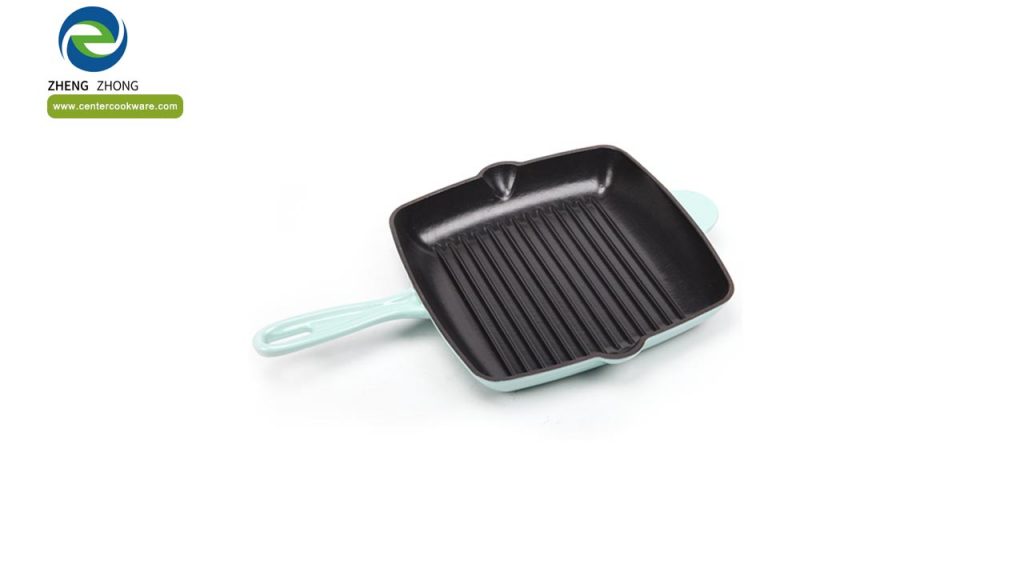
1. The Engineering of Indoor Grilling: Core and Raised Ridges
Unlike flat-surface skillets, an enamel cast iron grill pan is distinctively engineered with parallel raised ridges. These structural elements serve specific thermal and mechanical functions:
- Simulated Grilling Physics: The raised ridges make direct contact with food, conducting intense, localized thermal energy to create immediate Maillard reaction char marks. The recessed channels between the ridges radiate dry ambient heat, baking the food simultaneously.
- Volumetric Heat Battery: Forged from iron alloys with carbon content exceeding 2%, the pan's thick base absorbs large volumes of heat energy. When cold meats or vegetables are dropped onto the pan, the surface temperature remains steady, avoiding the moisture-steaming effect common in lightweight aluminum cookware.
- Effective Fat Management: The deep grooved channels act as drainage reservoirs. Excess fats and juices render out of the food and drop below the cooking plane, minimizing smoke, preventing the food from boiling in its own moisture, and producing leaner results.
2. The Multi-Layer Vitreous Coating Structure
The pan features an advanced multi-layer glass encapsulation that eliminates the vulnerabilities of raw iron:
- Ground Coat (Base Layer): Specially engineered to bond mechanically and chemically with the sand-blasted micro-pores of the raw cast iron blank. This avoids thermal shock delamination under rapid temperature shifts.
- Matte Black Interior Enamel: Most premium grill pans utilize a specialized satin black enamel coating internally. This matte surface texture is explicitly optimized for high-temperature grilling. It resists scratching, hides oils, and does not require manual seasoning to remain non-reactive.
- Gloss Exterior Cover Coat: Applied in multiple layers, this glaze provides rich, durable color gradients (such as classic deep solids or trending ombrés), adding impact resistance and enabling seamless stovetop-to-table presentation.
3. Key Operational Benefits: Why Choose Enameled Iron?
- Zero-Maintenance Rust Prevention: Traditional raw cast iron requires meticulous drying and frequent oil seasoning. The vitreous glass shell completely insulates the iron from water and oxygen, rendering it entirely rustproof.
- Universal Cooktop Versatility: Because its underlying core is highly ferromagnetic, an enameled grill pan transitions seamlessly across induction, gas, electric, ceramic glass stoves, and baking ovens up to 260°C.
- Acidic Liquid Compatibility: The glass surface is chemically inert. This allows chefs to deglaze the hot pan with acidic liquids like wine, lemon juice, or tomato-based marinades right after grilling without risk of metallic flavors leaching into the meal.
4. Quality Sourcing & Production Metrics
For global distribution networks and professional appliance partnerships, the longevity of enameled cast iron relies strictly on foundry precision. Automated machine casting outperforms manual sand molding on every metric:
| Quality Metric | Automated Machine-Cast Grill Pans | Manual Sand-Cast Grill Pans |
| Ridge Uniformity | Exact, level height profiling | Irregular height; uneven searing |
| Structural Density | Exceeds 90%; free of internal micro-bubbles | High porosity; prone to thermal cracking |
| Enamel Bonding | Consistent, calculated glaze thickness | Variable thickness; high chip rate |
| Base Planarity | Completely flat; safe for induction glass | Irregular profile; high risk of cooktop scratching |
Top-tier manufacturers maintain complete control over raw inputs by producing their enamel frits in-house. This vertical integration ensures the finished glaze is certified free of heavy metals and satisfies global consumer safety standards such as LFGB (Germany) rigorous chemical migration testing, California Proposition 65 for heavy-metal safety, and FDA compliance.
Frequently Asked Questions (FAQ)
Q: Do you need to put oil on an enamel cast iron grill pan? A: Yes, a light layer of oil should be brushed onto the food or directly onto the hot ridges before cooking. While the enamel coating prevents rust and minimizes sticking, it is a low-stick surface rather than a chemical non-stick (like Teflon), so a small amount of high-smoke-point oil is required for clean food release.
Q: Why does food stick to my enameled grill pan? A: Sticking is typically a result of adding food before the pan has reached the proper temperature, or attempting to flip food too early. Cast iron takes longer to preheat. Let the pan heat over medium for 5 minutes; once the meat forms a proper grilled crust, it will release naturally from the ridges.
Q: How do you clean stuck-on char from the grill ridges? A: Avoid abrasive steel scouring pads. Instead, let the pan cool, add warm water and two tablespoons of baking soda, and bring it to a gentle simmer for 10 minutes. The carbonized food will loosen, allowing you to wipe it away easily with a nylon brush or soft sponge.
Q: Can you use an enameled grill pan on an induction cooktop? A: Yes. The dense iron-carbon core is inherently ferromagnetic. It functions with maximum energy efficiency on all modern induction stoves. Ensure you lift the heavy pan instead of sliding it to avoid scratching the induction glass surface.
Q: What is the difference between a matte black enamel interior and bare cast iron? A: Although matte black enamel looks like raw iron, it is actually a smooth, specialized glass layer. It offers the same high-heat searing advantages as bare iron but provides total immunity to rust and chemical reactions without ever needing to be seasoned with oil.