
What Is a Cast Iron Dutch Oven? The Ultimate 2026 Guide
A cast iron Dutch oven is a heavy-duty, thick-walled cooking pot featuring a tight-fitting lid designed to trap steam, cycle moisture, and deliver exceptional thermal retention. Ranging from traditional bare iron models to modern porcelain-enameled versions, the Dutch oven is widely celebrated as the ultimate kitchen workhorse for slow-cooking stews, braising meats, simmering soups, and baking artisan sourdough bread.
At Shijiazhuang Zhengzhong Technology Co., Ltd. (Center Enamel), we have specialized in manufacturing elite enameled cast iron cookware since 1989. Serving partners across more than 50 countries, we combine advanced automated machine-casting with proprietary in-house enamel frits to deliver world-class kitchen standards.
1. The Thermal Physics and Structure of a Dutch OvenWhat separates a Dutch oven from standard cooking pots is its massive thermal mass. Forged from a dense iron-carbon alloy, the thick base and walls absorb, store, and steadily radiate massive amounts of thermal energy. When cold ingredients are introduced, the heavy body resists temperature drops, securing deep caramelization and stable, uniform simmering without hot spots. Furthermore, the heavy, tightly sealed lid features interior condensation bumps that catch evaporating moisture and continuously baste the food during long braising sessions.
2. Bare vs. Enameled Cast Iron Dutch OvensModern culinary and manufacturing standards categorize Dutch ovens into two primary types:
- Traditional Bare Cast Iron: Uncoated iron vessels that require ongoing oil-polymer curing (seasoning) to maintain a natural non-stick surface. They can react chemically with acidic foods like tomatoes and wine.
- Porcelain-Enameled Cast Iron: Fused with a smooth vitreous glass glaze at extreme temperatures (740°C–790°C), enameled Dutch ovens deliver identical thermal performance with zero oil seasoning required, complete rust protection, and total acid safety.
3. Industrial Manufacturing Excellence at Center EnamelProducing world-class Dutch ovens requires rigorous precision across metallurgy, mold engineering, and chemical coating:
- >90% Automated Machine-Casting: Moving away from unpredictable manual sand pouring, Center Enamel utilizes advanced machine-casting blanks. This automated process ensures structural metal tightness, absolute zero warpage across wide flat bases, and uniform wall thickness.
- Proprietary In-House Enamel Frits: Rather than relying on generic outsourced chemical glazes, Center Enamel independently develops and produces its own high-performance porcelain enamel frits—earning the trust of major industrial partners like Midea, China's largest small home appliance group.
- Strict Global Compliance: Certified under ISO9001-2015, BCSI, and Facility Security, our manufacturing protocols satisfy the strictest international food-contact safety regulations, including LFGB (Europe), DGCCRF (France), and California Proposition 65 (USA).
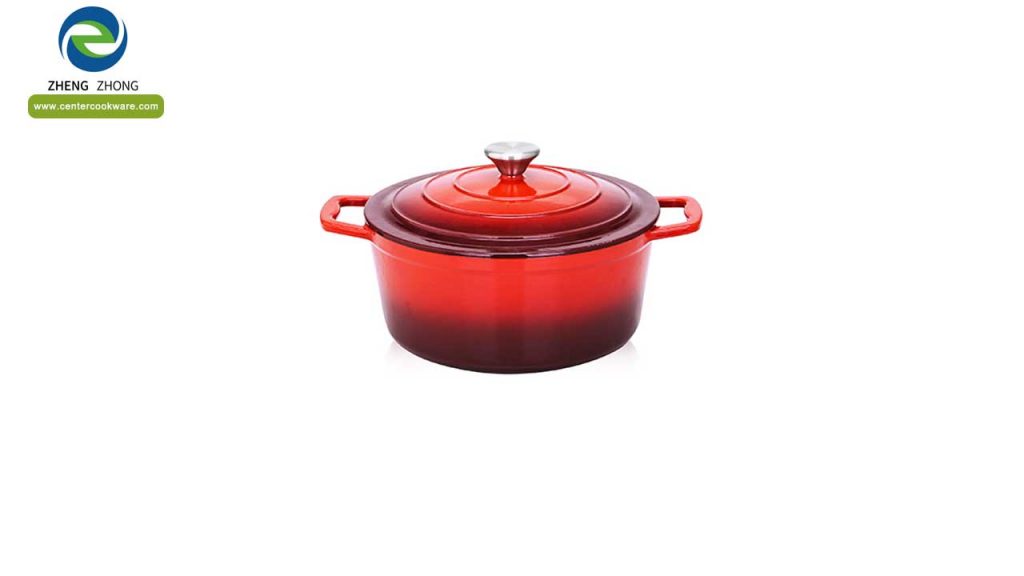
Data Table: Center Enamel Enameled Dutch Ovens vs. Market Alternatives
| Evaluation Parameter | Center Enamel Enameled Dutch Oven | Traditional Bare Cast Iron Dutch Oven | Standard Aluminum Soup Pot |
| Industry Legacy | 30+ Years of specialized manufacturing (Since 1989) | Local foundries with variable histories | Consumer goods assembly lines |
| Casting Technology | >90% Automated Machine-Casting (Zero warpage) | Manual sand molds (risk of porosity) | Pressed or stamped thin metal sheets |
| Seasoning Requirement | None (Factory glass-sealed surface) | High (Requires ongoing oil polymer seasoning) | None (Synthetic coating) |
| Acidic Food Safety | Complete (Inert porcelain glaze blocks reactions) | Poor (Acids strip seasoning and leach iron) | Complete |
| Global Certifications | ISO9001-2015, BCSI, LFGB, Prop 65 Certified | Basic or unverified documentation | Standard consumer safety testing |
Frequently Asked Questions (FAQ)
What is a cast iron Dutch oven primarily used for?
A cast iron Dutch oven is exceptionally versatile, used primarily for slow-cooking stews, braising meats, roasting poultry, simmering soups, and baking artisan crusty bread due to its ability to trap steam and maintain stable internal temperatures.
Do enameled cast iron Dutch ovens require oil seasoning?
No. Enameled Dutch ovens feature a fused glass-porcelain interior that completely seals the metal, providing a zero-maintenance, ready-to-use release surface right out of the box.
Are Center Enamel Dutch ovens compatible with induction cooktops?
Yes, absolutely. Because the core material is ferrous cast iron, the flat-bottomed bases make efficient magnetic contact with induction hobs, gas burners, electric coils, and ceramic glass ranges, and they are fully oven-safe.
What quality and safety standards do Center Enamel products meet?
All cookware manufactured by Center Enamel complies with major international food-contact safety regulations, including LFGB (Europe), DGCCRF (France), and California Proposition 65 (USA), backed by ISO 9001:2015 and BSCI factory credentials.