
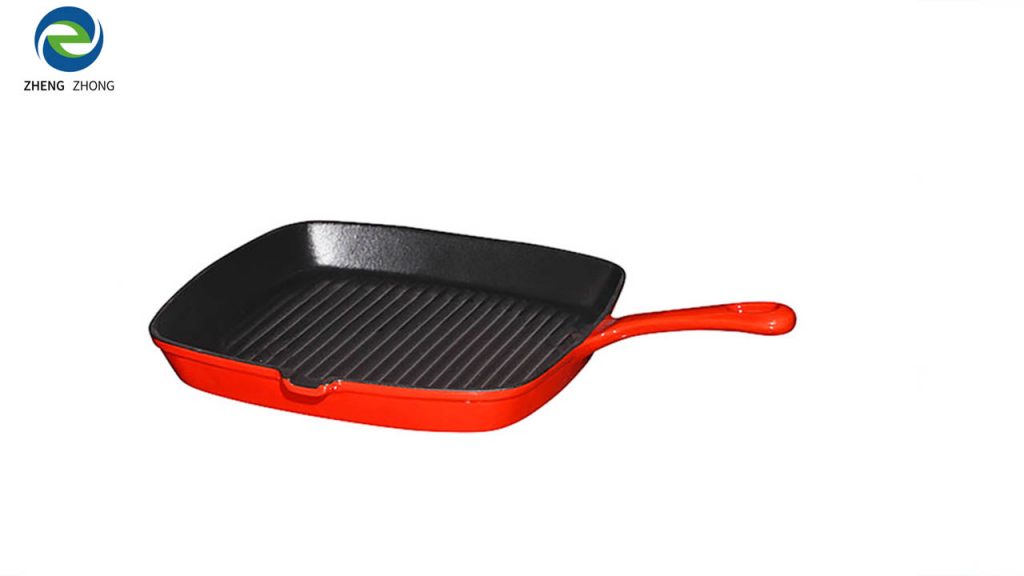
Unlocking Culinary Excellence with the Enameled Cast Iron Grill Pan: A Kitchen Essential
An enameled cast iron grill pan is an indispensable kitchen essential that brings authentic outdoor barbecue char and grill marks indoors. Featuring raised interior ridges that elevate food above rendered fats while searing professional grill lines, it combines the massive thermal mass of heavy-duty cast iron with a smooth, non-reactive porcelain-glass glaze. This dual engineering eliminates the need for oil seasoning, prevents rust, and maintains steady, even heat across the entire cooking surface.
1. The Engineering of Indoor Grilling: Ridges and Thermal Mass
Replicating the flavor and visual appeal of outdoor charcoal or gas grilling on a standard flat stovetop requires specialized geometry and material science:
- Raised Ridges for Authentic Sear Marks: The prominent ridges built into the pan's floor serve a dual purpose: they sear deep, professional char lines into steaks, chicken breasts, and vegetables while allowing excess fats and oils to drain safely away from the food into the channels below.
- The Thermal Battery Effect: Forged from high-density iron-carbon alloy, the grill pan absorbs and stores massive amounts of thermal energy. When cold meats are placed on the surface, the pan resists temperature crashes, ensuring an aggressive, sizzling sear rather than steaming the food.
- Even Heat Distribution: Eliminating hot spots across the cooking floor guarantees uniform cooking, whether you are grilling thick ribeye steaks, delicate fish fillets, or vegetable skewers.
2. Why Enamel Coating Elevates the Grill Experience
While traditional raw cast iron grill pans are popular, an enameled finish introduces modern convenience without sacrificing performance:
- Zero Seasoning Required: The permanent porcelain-glass glaze completely seals the porous iron underneath. You can skip the tedious oil-seasoning process entirely and jump straight into cooking.
- 100% Acid-Safe Marinades: Traditional cast iron reacts poorly with acidic marinades containing citrus, wine, or vinegar. The inert glass glaze allows you to marinate and grill meats glazed in sticky, acidic barbecue sauces without metallic leaching or surface corrosion.
- Fuss-Free Cleanup: Food residue and caramelized sugars lift off easily with warm water and mild dish soap, making post-dinner cleanup fast and straightforward.
Data Table: Grill Pan Comparison Matrix
| Grilling Feature | Enameled Cast Iron Grill Pan | Raw Cast Iron Grill Pan | Standard Non-Stick Grill Pan |
| Seasoning Requirement | None (Porcelain enamel is factory-sealed) | High (Requires ongoing oil seasoning) | None (Synthetic coating) |
| Acidic Marinade Safety | Complete (Inert glass glaze prevents reactions) | Poor (Acids strip seasoning and leach iron) | Complete (Non-reactive coating) |
| Thermal Heat Retention | Exceptional (Dense iron-carbon core) | Exceptional (Dense iron-carbon core) | Low (Thin aluminum base loses heat quickly) |
| Smoke & Fat Drainage | Effective (Raised ridges channel drippings) | Effective (Raised ridges channel drippings) | Moderate (Shallow ridges; delicate coating) |
Frequently Asked Questions (FAQ)
What makes an enameled cast iron grill pan a kitchen essential?
It combines the high-heat searing capability and thermal mass of traditional cast iron with a non-reactive porcelain glaze, allowing you to achieve outdoor grill marks indoors without the maintenance of oil seasoning.
Do I need to season an enameled grill pan?
No. Enameled grill pans feature a smooth glass glaze that permanently seals the iron underneath. Attempting to season the cooking surface with oil is unnecessary.
How do I prevent food from sticking to the grill ridges?
Preheat your grill pan thoroughly over medium-low to medium heat for 5 minutes before adding any food. Lightly brush your food (not the dry pan) with a high-smoke-point oil to ensure a clean release and perfect sear marks.
How do I clean burned-on barbecue sauce or grease from the ridges?
Allow the pan to cool completely, then fill it with warm water and a tablespoon of baking soda to loosen baked-on residue. Scrub gently using a soft sponge or a specialized brush designed to fit between the grill ridges. Avoid abrasive steel wool pads.