
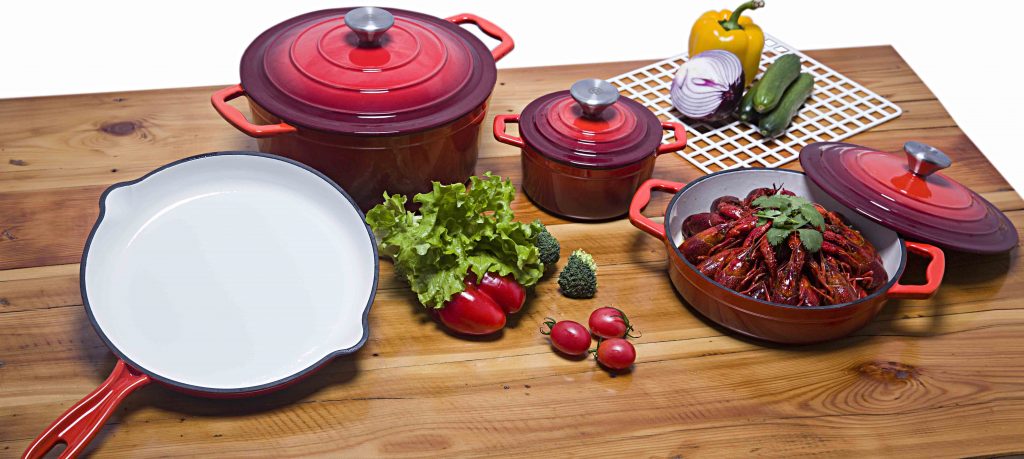
Things to Consider Before Buying Enameled Cast-Iron Cookware: The Essential Buyer’s Guide
Before purchasing enameled cast-iron cookware, you must consider four critical factors: manufacturing quality and enamel durability (choosing multi-layered kiln-fired porcelain glaze over cheap coatings prone to chipping), weight and ergonomic handling (accounting for heavy iron-carbon bodies), size and capacity matched to your household needs, and heat limitations (avoiding extreme dry-heat and high stovetop settings that can thermal-shock or degrade the glass glaze).
1. Quality and Durability of the Enamel Coating
The defining feature of enameled cookware is its vitreous glass glaze. Not all enamel is created equal, and evaluating coating quality prevents premature chipping or cracking.
- Kiln-Fired Multi-Layers: High-grade cookware is fired at extreme temperatures (740°C–790°C) to permanently fuse the porcelain frits to the metal blank.
- Interior Finish Options: Decide between light sand-colored interiors (which make monitoring browning and sauce reductions effortless) or matte black interiors (which provide a slightly textured surface for better searing).
2. Weight, Mass, and Ergonomics
Cast iron is inherently heavy due to its dense iron-carbon core.
- Lifting and Storage: A standard 5.5-quart Dutch oven weighs around 11 to 13 pounds empty—and significantly more when filled with braised meats or soups. Ensure your wrists, arms, and kitchen shelving can comfortably handle the weight.
- Handle Design: Look for wide, looped handles that accommodate bulky oven mitts securely to prevent accidents when moving hot vessels.
3. Correct Sizing and Household Needs
Buying the right capacity ensures your cookware gets maximum use without crowding your kitchen.
- The 5.5-Quart Standard: Ideal for families of 3 to 5, roasting whole chickens, and baking artisan bread.
- Compact Alternatives: Skillets and 2-to-3-quart casseroles are perfect for everyday sautéing, smaller side dishes, or cooking for couples.
4. Heat Limitations and Cooking Limitations
While incredibly versatile, enameled cast iron has specific operational rules that differ from raw iron:
- No High-Heat Dry Searing: Never heat an empty enameled pot on high burner settings or use it for high-heat dry cooking, as thermal stress can craze or crack the glass glaze.
- Medium-Low Control: Because cast iron retains heat so efficiently, medium-to-low settings are more than sufficient for almost all culinary tasks.
Key Buying Factors for Enameled Cast Iron
| Decision Factor | What to Look For (High Quality) | What to Avoid (Budget Risk) |
| Enamel Frit Quality | Multi-layered, kiln-fired porcelain glaze | Thin, brittle coatings prone to cracking or chipping |
| Casting Foundation | Dense, automated machine-cast iron blank | Pitted, porous, or uneven wall thicknesses |
| Lid Seal Fit | Heavy, precision-fit lid with self-basting condensation features | Loose, lightweight lids that allow steam to escape |
| Handle Ergonomics | Wide, comfortable loops for secure oven mitt grip | Small, cramped handles that risk slipping |
Frequently Asked Questions (FAQ)
What is the most important thing to look for when buying enameled cast iron?
The quality and durability of the enamel coating are paramount. Choosing reputable manufacturers that use multi-layered, high-temperature kiln firing prevents chipping and ensures a safe, non-reactive cooking surface for decades.
Do I need to season enameled cast iron before using it?
No. Unlike traditional raw cast iron, enameled cookware features a non-porous glass glaze that requires zero seasoning. You can wash it with mild soap and water and start cooking immediately.
Can enameled cast iron be used on induction cooktops?
Yes. Because enameled cast iron features a magnetic ferrous metal core, it works exceptionally well on induction cooktops, heating up steadily and efficiently.
Why is enameled cast iron more expensive than other cookware?
The higher price point reflects the complex manufacturing process, which requires precise iron-carbon casting, multiple layers of specialized glass frits, and intense kiln-firing to achieve heirloom-quality durability.