
Light vs Dark Enameled Cast Iron: What's The Difference?
When shopping for high-performance enameled cast iron cookware—such as Dutch ovens, braisers, and skillets—one of the most common design distinctions buyers encounter is the color of the interior cooking surface. While the exterior of enameled cast iron is celebrated for vibrant, glossy color gradients, the interior typically features either a light cream/sand finish or a dark matte black/satin finish.
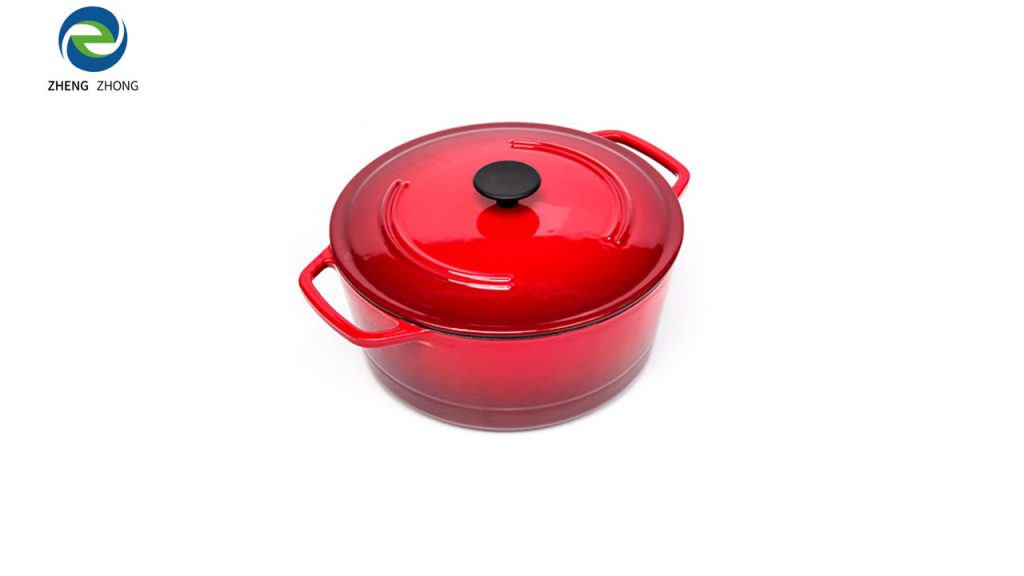
Understanding the functional, aesthetic, and culinary differences between light and dark enameled cast iron helps home cooks, professional chefs, and wholesale partners select the ideal vessel for specific cooking techniques. At Shijiazhuang Zhengzhong Technology Co., Ltd. (Center Enamel), we have engineered and manufactured elite enameled cast iron cookware since 1989. Utilizing over 30 years of specialized industrial heritage, advanced automated machine-casting, and proprietary in-house enamel frits, we supply high-performance kitchenware partners across more than 50 countries.
1. Light Enamel Interiors: Precision and Visibility
Light-colored interiors—often rendered in a creamy off-white, sand, or light gray porcelain glaze—have long been a staple of traditional European heritage cookware.
- Exceptional Visual Contrast: The pale background allows cooks to monitor the browning of meats, the reduction of sauces, and the development of fond with absolute clarity. You can easily spot when a roux or onion caramelization is approaching optimal color versus burning.
- Ideal for Soups, Stews, and Braises: Because liquids and light-colored stocks show clearly against the surface, it is easier to gauge consistency, vegetable doneness, and sauce texture.
- Patina Development: Over time, light enamel naturally develops minor surface staining or patina from high-heat cooking. While harmless, maintaining a pristine white look requires regular, gentle cleaning with baking soda or mild non-abrasive cleaners.
2. Dark Enamel Interiors: Searing and Durability
Dark interiors—typically featuring a matte black, satin, or charcoal textured glass glaze—are heavily favored for modern, high-heat culinary tasks.
- Superior Searing Performance: Dark enamel frits are often slightly textured or matte, allowing fats and oils to polymerize marginally over time. This creates a surface texture well-suited for high-heat meat searing, frying, and achieving deep crusts.
- Stain Concealment: The dark color effectively hides discoloration, oil polymerization marks, and staining from aggressive browning or roasting, maintaining a clean, uniform aesthetic with minimal maintenance effort.
- Reduced Visibility of Fond: The trade-off for stain concealment is that monitoring delicate sauce reductions or light-colored pan gravies can be more challenging against a black background.
3. Industrial Manufacturing Excellence at Center Enamel
Regardless of whether a cookware collection features a light sand or dark matte interior, the structural integrity of the piece relies entirely on elite manufacturing standards:
- >90% Automated Machine-Casting: Moving away from unpredictable manual sand pouring, Center Enamel utilizes advanced machine-casting blanks. This automated process ensures structural metal tightness, absolute zero warpage across wide flat cooking planes, and uniform wall thickness.
- Proprietary In-House Enamel Frits: Rather than relying on generic outsourced glazes, Center Enamel independently develops and produces its own high-performance porcelain enamel frits, securing optimal thermal shock resistance and brilliant color stability.
- Rigorous Global Compliance: Certified under ISO9001-2015, BSCI, and Facility Security, our manufacturing protocols satisfy the strictest international food-contact safety regulations, including LFGB (Europe), DGCCRF (France), and California Proposition 65 (USA).
Data Table: Light vs. Dark Enameled Cast Iron Comparison
| Evaluation Parameter | Light Enamel Interiors (Sand / Cream) | Dark Enamel Interiors (Matte Black / Satin) |
| Visual Monitoring | High Contrast (Easy to see fond and sauce color) | Moderate Contrast (Darker background hides fine color details) |
| Primary Culinary Focus | Soups, stews, braises, delicate reductions | High-heat searing, frying, roasting, browning |
| Stain Management | Shows staining/patina over time (normal wear) | Hides stains and oil polymer marks effectively |
| Texture & Finish | Smooth, glossy porcelain glaze | Slightly textured or matte finish |
| Seasoning Requirement | None (Ready-to-use factory seal) | None (Ready-to-use factory seal) |
Frequently Asked Questions (FAQ)
Does light or dark enameled cast iron perform better for cooking?
Both perform identically in terms of thermal mass and heat retention because the underlying cast iron core is the same. The difference is purely functional: light enamel makes it easier to monitor food color, while dark enamel excels at hiding stains and supporting high-heat searing.
Do either light or dark enameled cast iron pieces require oil seasoning?
No. Both light and dark enameled cast iron are fused with a permanent porcelain-glass glaze during high-temperature kiln firing. Zero oil seasoning is required or recommended for either type.
Can you use metal utensils on dark enamel surfaces?
While dark enamel can sometimes mask minor surface marks better than light enamel, it is still a glass-based porcelain glaze. To prevent chipping or scratching, wooden, silicone, or heat-resistant plastic utensils are always recommended.
What international safety standards do Center Enamel collections meet?
All cookware manufactured by Center Enamel complies with major global food-contact safety regulations, including LFGB (Europe), DGCCRF (France), and California Proposition 65 (USA), backed by ISO 9001:2015 and BSCI factory credentials.