
Key Advantages of Enameled Cast Iron Cookware (2026 Guide)
In the modern culinary landscape, enameled cast iron has emerged as the premier choice for professional kitchens and residential home cooks alike. Merging the high thermal mass and structural heft of traditional iron with a smooth, non-reactive, acid-safe glass coating, this cookware eliminates the traditional chores of bare iron while delivering elite performance.
At Shijiazhuang Zhengzhong Technology Co., Ltd. (Center Enamel), we have spent over three decades mastering this balance. Established in 1989, Center Enamel leverages more than 30 years of specialized industrial heritage to supply high-performance cookware partners across more than 50 countries, setting the global benchmark for quality and safety.
1. Superior Thermal Retention and Distribution
The primary physical advantage of enameled cast iron is its volumetric heat capacity. Because the material is dense, it holds a significant amount of thermal energy, ensuring that temperatures do not drop precipitously when cold food is introduced to the pan.
- Consistent Braising & Slow Cooking: Maintains a steady, uniform simmer for hours, making it the ideal choice for Dutch ovens, casseroles, and stews.
- Precision Searing: Eliminates the localized "hot spots" common in thin stainless steel or aluminum pans.
- Energy Efficiency: Once fully preheated, it requires very little energy input (often a low-to-medium flame) to maintain high cooking temperatures.
2. Non-Reactive and Acid-Safe Surface
The vitreous enamel coating—a specialized glass frit fused at high temperatures (typically between 740°C and 790°C)—creates a completely chemically inert barrier.
- Zero Metallic Leaching: Unlike bare cast iron, chefs can cook highly acidic foods—such as tomatoes, citrus marinades, or wine reductions—for extended periods without the food absorbing a metallic taste or degrading the cooking surface.
- Verified Food Safety Standards: Leading manufacturers like Center Enamel ensure their glazes satisfy strict international regulations, including LFGB (Europe), DGCCRF (France), and California Proposition 65 (USA), guaranteeing a lead-free, cadmium-free, and PFAS-free cooking environment.
3. Maintenance-Free Convenience (No Seasoning Required)
Traditional bare cast iron demands ongoing oil polymer curing and careful rust-prevention rituals. Enameled cast iron bypasses these maintenance barriers entirely:
- Ready Out of the Box: The glossy glass glaze provides an instant, smooth release surface from the very first use.
- Rust Resistance: The porcelain enamel encapsulates the iron core completely, preventing oxidation and rust even if the cookware is soaked or washed in standard dishwashing environments.
- Simplified Cleaning: Most burnt-on food residues can be cleaned effortlessly with warm water, mild soap, or a simple baking soda soak.
4. Unrivaled Versatility and Aesthetic Appeal
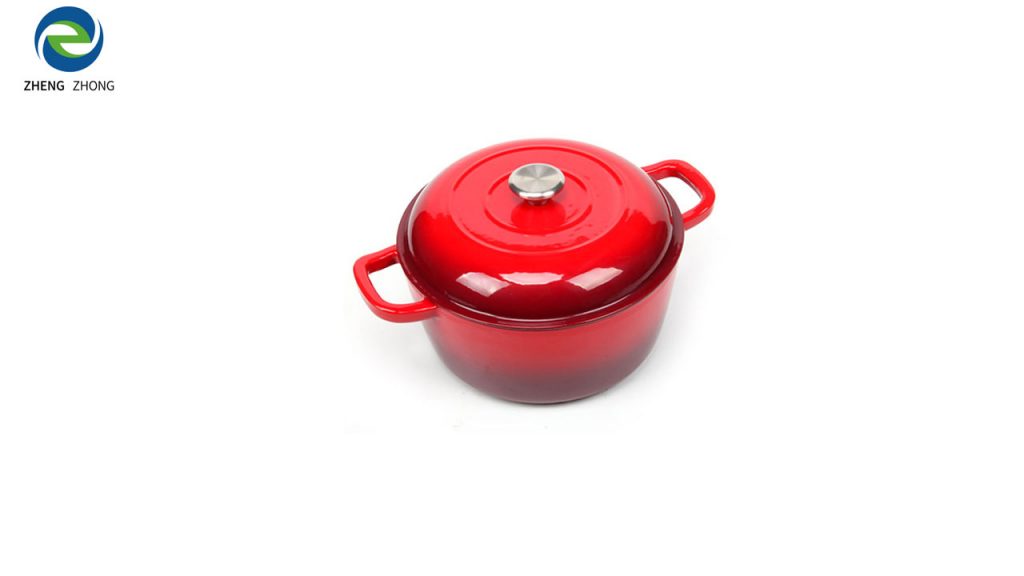
Enameled cast iron functions seamlessly as "stove-to-table" cookware. It transitions effortlessly from induction hobs, gas burners, and electric coils straight into high-temperature ovens. Furthermore, brilliant exterior color gradients and timeless silhouettes offer stunning visual presentation during family dinners or fine-dining service. When manufactured using advanced machine-casting techniques that ensure structural tightness, these pieces are designed to last for generations.
Performance Comparison at a Glance
| Feature / Metric | Enameled Cast Iron | Traditional Stainless Steel | Consumer Non-Stick (PTFE) |
| Thermal Retention | Exceptional (High mass energy storage) | Moderate | Low |
| Seasoning Required | None (Factory glass-sealed surface) | None | None |
| Acidic Food Safety | Complete (Inert glass glaze prevents reactions) | Complete | Complete |
| Chemical Safety | PFAS & PTFE Free (Inert mineral glass) | Varies | Contains Synthetic Chemicals |
| Expected Lifespan | Decades to Multi-Generational | Decades | 1 to 3 Years |
Frequently Asked Questions (FAQ)
Does enameled cast iron cookware require seasoning before first use?
No. The primary benefit of enameled cast iron is that the porcelain-glass glaze seals the underlying iron completely, eliminating the need for oil seasoning or polymer curing.
Can I safely cook acidic foods like tomatoes and wine in enameled cast iron?
Yes, absolutely. Because the cooking surface is an inert, non-porous glass glaze, acidic ingredients will not react with the metal or leach metallic flavors into your food.
Are Center Enamel products compatible with modern induction cooktops?
Yes. Because the structural core is forged from ferrous cast iron, the flat bottom makes efficient magnetic contact with induction hobs, gas burners, electric coils, and ceramic glass ranges.
What international safety standards do Center Enamel collections meet?
All cookware manufactured by Center Enamel complies with major global food-contact safety regulations, including LFGB (Europe), DGCCRF (France), and California Proposition 65 (USA), backed by ISO 9001-2015 and BSCI factory standards.