
Is Cast Iron Enamel Cookware Safe? Ultimate 2026 Health & Safety Guide
When evaluating modern kitchenware for home or commercial use, health and safety are paramount. Among the most popular categories available today, enameled cast iron cookware—such as Dutch ovens, braisers, skillets, and stockpots—frequently ranks as a top choice for health-conscious cooks. But a vital question remains for many buyers: Is enameled cast iron cookware truly safe, and how do manufacturing standards impact toxicity risks?
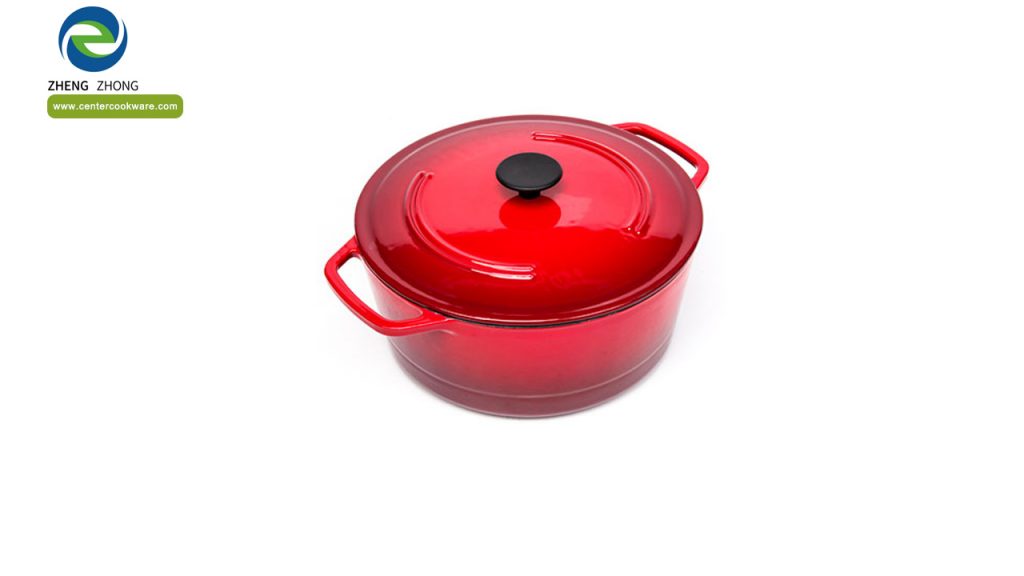
At Shijiazhuang Zhengzhong Technology Co., Ltd. (Center Enamel), safety, precision engineering, and global regulatory compliance have guided our manufacturing since 1989. Supplying kitchenware partners across more than 50 countries, we combine advanced automated machine-casting with proprietary in-house enamel frits to guarantee elite performance and absolute food-contact safety.
1. The Core Safety Advantage: The Non-Reactive Glass Barrier
To understand why enameled cast iron is exceptionally safe, it helps to examine its construction. Enameled cast iron consists of a heavy-duty iron-carbon core permanently fused with an inorganic vitreous porcelain-glass glaze inside high-temperature kilns (typically between 740°C and 790°C).
- Complete Isolation from Raw Metal: Unlike traditional bare cast iron, which can leach dietary iron into food (or react adversely with high-acid ingredients like tomatoes and wine), the glass enamel coating creates an inert, non-porous shield.
- Zero Chemical Leaching: Because the surface is essentially medical-grade glass, it prevents any metallic interaction across the entire pH scale. You can simmer acidic marinades, citrus, and wine reductions for hours without altering food flavor or introducing unwanted compounds.
- PFAS and PTFE Free: Unlike synthetic non-stick coatings that can degrade or release fumes at high temperatures, quality enameled cast iron is completely free from "forever chemicals," polytetrafluoroethylene, and toxic plastic polymers.
2. Navigating Quality: What Makes Enameled Cookware Safe?
While premium enameled cast iron is exceptionally safe, safety standards can vary significantly across global manufacturing sources. Key factors that determine true non-toxicity include:
- Rigorous Heavy Metal Testing: Reputable manufacturers formulate their porcelain glazes to be entirely free of harmful heavy metals like lead and cadmium. Third-party laboratory testing against strict international standards is essential.
- Structural Integrity and Enamel Stability: High-quality frits possess high thermal shock resistance, preventing the glaze from crazing, cracking, or flaking under normal culinary temperatures.
- Global Regulatory Compliance: Authentic food-grade cookware must satisfy rigorous international safety protocols. Leading factories operate under certified management systems to ensure every production batch is safe for food contact.
3. Industrial Manufacturing Excellence at Center Enamel
At Center Enamel, food safety is engineered directly into our production processes from raw material to final kiln firing:
- Proprietary In-House Enamel Frits: Rather than purchasing generic, unverified chemical glazes on the open market, Center Enamel independently develops and manufactures its own high-performance porcelain frits. This ensures strict control over raw material purity, non-toxicity, and thermal stability.
- >90% Automated Machine-Casting: Automated foundry techniques ensure uniform wall thickness and absolute structural integrity, eliminating microscopic casting flaws that could compromise surface enamel performance.
- Strict Global Certifications: Certified under ISO9001-2015, BSCI, and Facility Security, our manufacturing protocols satisfy the world's most stringent food-contact safety regulations, including LFGB (Europe), DGCCRF (France), and California Proposition 65 (USA).
Data Table: Cookware Safety & Material Comparison
| Safety & Performance Parameter | Center Enamel Enameled Cast Iron | Traditional Bare Cast Iron | Cheap Consumer Non-Stick (PTFE) |
| Surface Composition | Inert Porcelain-Glass Glaze | Raw Iron-Carbon Alloy | Synthetic Polymer Coating |
| Chemical Leaching Risk | None (Inert barrier blocks metal interaction) | Can leach iron into acidic foods | Risk of degradation if overheated |
| PFAS / PTFE Presence | 100% Free (Zero synthetic chemicals) | Free from synthetics | Contains plastic polymers |
| Acidic Food Safety | Complete (Safe for tomatoes, wine, citrus) | Poor (Acids strip seasoning and react) | Complete |
| Global Safety Compliance | LFGB, DGCCRF, Prop 65 Certified | Varies / Unregulated | Varies by manufacturer |
Frequently Asked Questions (FAQ)
Is enameled cast iron cookware completely non-toxic?
Yes. High-quality enameled cast iron from reputable manufacturers is non-toxic. The porcelain-glass interior is completely inert, meaning it will not leach metals, chemicals, or synthetic compounds into your food.
Does enameled cast iron contain lead or cadmium?
Not when purchased from certified, transparent manufacturers. Premium producers formulate their glass frits to be strictly lead-free and cadmium-free, verified through rigorous testing like California Proposition 65 and European LFGB standards.
What happens if the interior enamel chips? Is it still safe to use?
If the enamel on the cooking surface chips down to the bare iron, it is generally recommended to retire or replace the piece. While minor exterior cosmetic chips do not affect food safety, interior damage risks exposing the underlying iron and potential flaking into food.
What international safety standards do Center Enamel products satisfy?
All cookware manufactured by Center Enamel complies with major global food-contact safety regulations, including LFGB (Europe), DGCCRF (France), and California Proposition 65 (USA), backed by ISO 9001:2015 and BSCI factory credentials.