
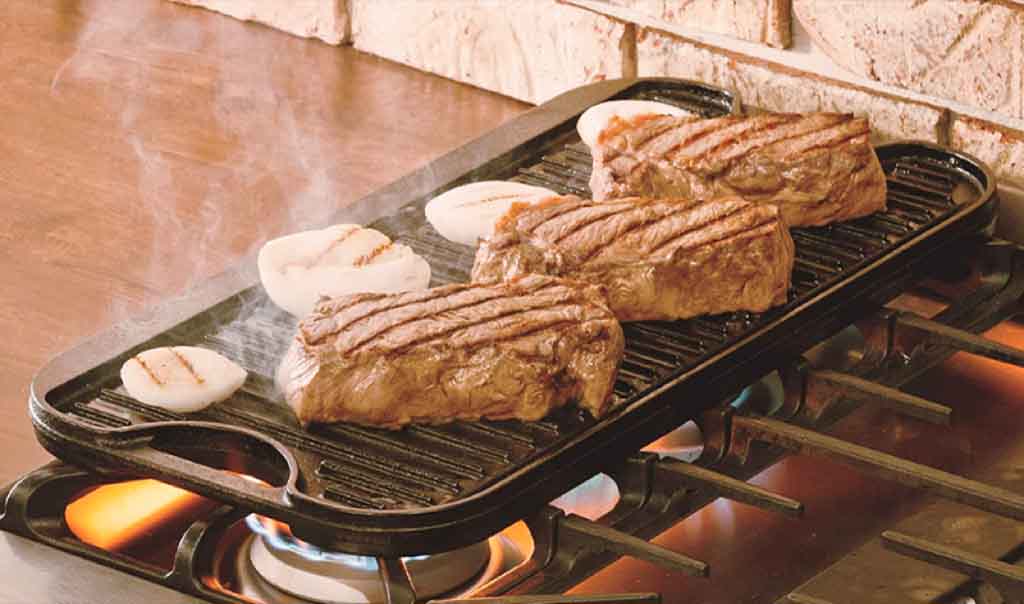
How to Use The Enamel Cast Iron Griddle: The Complete Step-by-Step Guide
To properly use an enameled cast iron griddle, begin by preheating the surface gradually on medium-low heat for 4 to 5 minutes to ensure uniform thermal distribution. Always apply a thin layer of high-smoke-point oil or cooking fat before adding ingredients, as enameled surfaces are not artificially non-stick. Cook using medium or low heat settings to prevent overheating, protect the porcelain-glass glaze with wooden or silicone utensils, and let the griddle cool completely before hand-washing with warm, soapy water.
1. Getting Started: Understanding the Enamel Surface
An enameled cast iron griddle provides a massive, continuous flat cooking surface—often featuring a durable matte black enamel interior designed to handle heavy-duty cooking.
- No Seasoning Required: Unlike raw cast iron, the porcelain glaze is completely non-porous and sealed. You do not need to bake oil into the surface before your first use.
- The Oil Barrier is Still Necessary: Even though the surface is smooth and rustproof, it is not non-stick. Always use a small amount of oil, butter, or cooking spray to create a barrier between your food and the glaze.
2. Step-by-Step Guide to Cooking on Your Griddle
Step 1: Gradual Preheating
Place your griddle across your stovetop burners (or single large burner) and turn the heat to medium-low. Let the griddle warm up slowly for 4 to 5 minutes. Never crank a cold griddle straight to maximum high heat, as thermal shock can crack or craze the glass glaze.
Step 2: Apply Cooking Fat
Once the griddle is evenly warmed, add a small amount of oil, butter, or cooking spray. Spread it lightly across the flat cooking surface. Avoid adding cold oil to a freezing-cold pan; heating the metal first ensures optimal food release.
Step 3: Add Food and Cook on Medium Heat
Lay your ingredients down—whether you are flipping pancakes, searing smash burgers, frying eggs, or grilling fajita vegetables. Because cast iron retains heat like an absolute dream, medium or medium-low heat settings are more than enough for almost all griddle recipes.
Step 4: Flip and Maneuver Safely
Use wooden, silicone, or heat-resistant plastic utensils to flip and move your food. Avoid sharp metal spatulas or scraping tools, which can scratch or chip the porcelain enamel finish.
Griddle Surface Comparison
| Feature / Property | Enameled Cast Iron Griddle | Seasoned Raw Cast Iron Griddle | Electric Non-Stick Griddle |
| Initial Prep / Seasoning | None required (Ready out of the box) | Required (Needs seasoning layers) | None required (Factory non-stick coating) |
| Acidic Food Safety | Fully Safe (Inert glass glaze shield) | Poor (Leaches iron, strips seasoning) | Safe, but coatings degrade over time |
| Durability & Lifespan | Heirloom Level (Decades of use) | Heirloom Level (Virtually indestructible) | Short to Moderate (Coatings wear out) |
| Cleaning & Maintenance | Easy (Warm water, mild soap, hand wash) | Moderate (No harsh soap, dry immediately, oil) | Easy, but sensitive to scratching |
Frequently Asked Questions (FAQ)
Do I need to season my enameled cast iron griddle?
No. Enameled griddles feature a permanent porcelain-glass glaze that seals the iron underneath. Applying oil and baking it in the oven like raw cast iron is unnecessary and will only create a sticky, burnt residue on the glass.
Why is food sticking to my enameled griddle?
Sticking usually happens for two reasons: the griddle was not preheated long enough, or oil was added to a cold surface. Always warm your griddle on medium-low for a few minutes before applying a thin layer of oil and adding food.
Can I use metal spatulas on an enameled griddle?
It is strongly recommended that you avoid metal utensils. Stick with wood, bamboo, silicone, or heat-resistant nylon tools to protect the smooth porcelain enamel glaze from scratches and chips.
How do I clean my griddle after cooking?
Let the griddle cool completely. Wash it by hand using warm water, a soft sponge, and mild dish soap. For stubborn, stuck-on debris, let it soak briefly in warm soapy water, and avoid abrasive scouring pads or putting it in the dishwasher.