
How to Shop for Cast Iron Cookware Products: The Definitive Buyer’s Guide
Shopping for cast iron cookware successfully requires evaluating four core pillars: determining the material type (choosing between traditional raw iron or porcelain-enameled iron), verifying manufacturing integrity (prioritizing automated machine-cast blanks over rough manual sand molds), matching the pot's volume to your household size, and ensuring rigorous safety compliance (verifying PFAS-free and heavy-metal-safe certifications such as LFGB and Proposition 65).
1. Choose Between Raw and Enameled Cast Iron
The very first step when shopping for cast iron is deciding which surface coating aligns with your cooking habits and maintenance preferences:
- Raw (Pre-Seasoned) Cast Iron: Best for cooks who enjoy building a natural non-stick oil seasoning over time, utilizing metal utensils freely, and cooking outdoors on campfires or high-heat broilers. It requires regular oiling and dry storage to prevent rust.
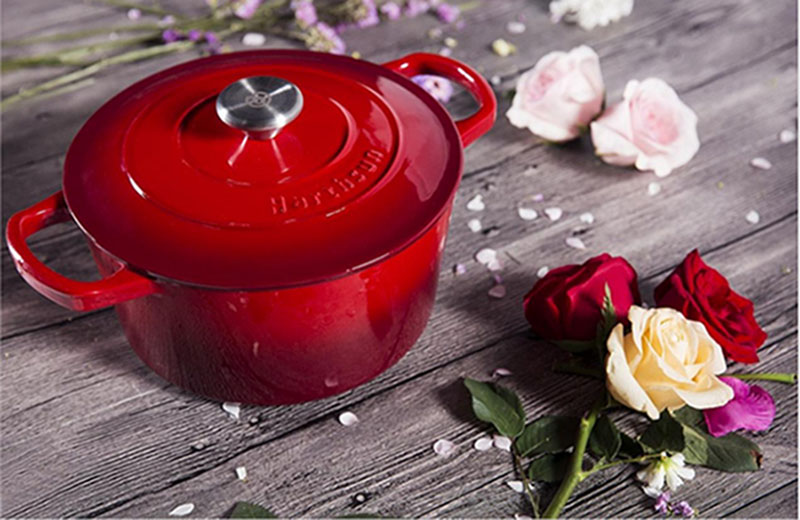
- Enameled Cast Iron: Best for those seeking zero-maintenance convenience. Coated with a fused porcelain-glass glaze, it is 100% rustproof, safe for cooking high-acid foods (like tomato sauce and wine), and offers vibrant aesthetic color gradients that double as dining table serveware.
2. Inspect Foundry Quality: Machine-Casting vs. Manual Molding
The structural lifespan and thermal performance of any cast iron pot are determined long before the enamel is applied—they start in the foundry.
- Automated Machine-Casting: High-tier cookware manufacturers utilize automated machine-casting molds rather than legacy manual sand casting. Machine-cast blanks offer superior structural tightness, uniform wall thicknesses, absolute resistance to high-heat warping, and an ultra-smooth surface profile that optimizes enamel bonding or oil seasoning adherence.
- Avoid Porous Castings: Cheap, low-quality cast iron often features visible surface pitting, uneven thick-and-thin walls, and micro-porosities that can crack under thermal stress or cause uneven heating.
3. Match Capacity and Sizing to Your Culinary Needs
Buying cookware that fits your actual household size and recipe volume prevents storage frustration and physical strain:
- The Gold Standard (5.5 Quarts): If you are buying your first Dutch oven, a 5.5-quart model is the ultimate all-purpose size. It comfortably accommodates families of 3 to 5 people, roasts whole chickens, and bakes standard artisan sourdough loaves.
- Compact Models (2 to 3.5 Quarts): Ideal for singles, couples, side dishes, sauces, or baking individual dips and desserts.
- Family & Entertaining Size (7 to 9+ Quarts): Perfect for larger families, meal prepping, batch cooking, and entertaining guests, though keep in mind these pots are exceptionally heavy when loaded.
4. Verify Non-Toxic Safety Certifications
In modern kitchenware shopping, verifying material safety is paramount. Ensure that any cast iron product you purchase meets strict international food safety standards:
- Free of Synthetic Chemicals: Confirm that the cookware is completely free from PFAS, PFOA, PTFE, and other fluoropolymers.
- Heavy Metal Compliance: Look for trusted international compliance markings—such as LFGB (European food safety standard) and California Proposition 65—which guarantee that exterior glazes are entirely free from toxic lead and cadmium.
Cast Iron Shopping Evaluation Matrix
| Shopping Factor | What to Look For (High Quality) | What to Avoid (Low Quality) |
| Casting Method | Automated machine-cast blanks with uniform wall thickness | Rough manual sand-castings with surface pitting |
| Surface Finish | Smooth, flawless porcelain glaze or even factory seasoning | Bubbled, uneven enamel or cracked exterior coatings |
| Handle Ergonomics | Wide, curved loop handles that accommodate oven mitts | Small, cramped handles that risk insecure grips |
| Safety Standards | LFGB and Prop 65 certified; 100% free of PFAS and lead | Unverified manufacturers lacking transparent material disclosures |
Frequently Asked Questions (FAQ)
What is the single most important factor when shopping for cast iron cookware?
The most important factor is evaluating foundry and manufacturing quality. Choosing a pot made with automated machine-casting ensures a dense, warp-resistant iron blank with uniform wall thickness, providing the structural foundation required for decades of reliable cooking.
Should I buy raw cast iron or enameled cast iron for everyday use?
For most home cooks, enameled cast iron is preferred because it offers the identical heavy-duty heat retention of raw iron without requiring oil seasoning or rust maintenance, while safely handling acidic foods like tomatoes. Choose raw cast iron only if you want to build a natural non-stick patina and use metal utensils aggressively.
How do I know if an inexpensive cast iron pot is safe to use?
Always check for transparent manufacturing disclosures and safety compliance certifications like LFGB or Proposition 65. Extremely cheap pots from unverified sources may utilize substandard recycled metal or exterior glazes containing trace heavy metals like lead or cadmium.
What is the best size Dutch oven to buy first?
A 5.5-quart Dutch oven is universally recommended as the best starting size. It is versatile enough to handle soups, braises, roasted meats, and artisan bread for small-to-medium families without being excessively heavy or difficult to store.