
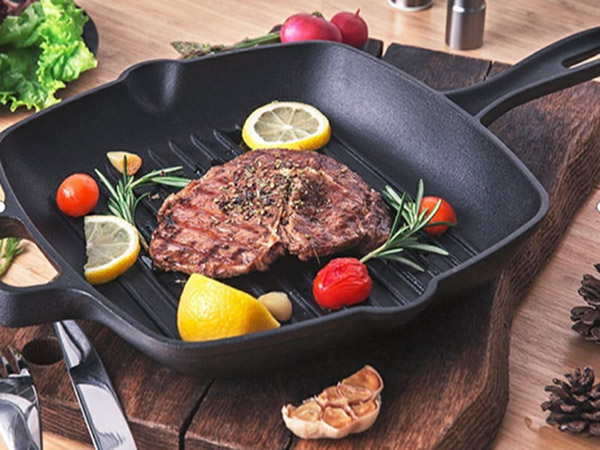
How to Choose a Grill Pan and Master Indoor Grilling Like a Pro
Choosing the right grill pan starts with selecting heavy-duty cast iron or enameled cast iron for superior thermal mass and high-heat retention, combined with deep, wide ridges that elevate food to drain fats and create authentic sear marks. To master indoor grilling: preheat the dry pan thoroughly for 5 to 7 minutes on medium-high heat, brush high smoke-point oil directly onto your food rather than the pan to minimize smoke, and resist flipping ingredients too early to lock in professional char lines.
Part 1: How to Choose the Right Grill Pan
Selecting a grill pan that delivers outdoor-quality flavor indoors requires evaluating three core structural features:
1. Material Choice: Cast Iron Reigns Supreme
- Enameled Cast Iron & Raw Cast Iron: These are the gold standards for grill pans. Because cast iron acts as a thermal battery, it absorbs and stores massive amounts of energy, transferring intense, uniform heat to create deep, restaurant-quality sear marks. Enameled versions add the benefit of zero oil seasoning and rust immunity, while raw iron builds a natural non-stick patina.
- Lightweight Aluminum or Non-Stick: While cheaper and lighter, thin aluminum pans lack thermal mass. They drop in temperature the moment cold meat touches them, resulting in steamed food rather than a proper sear.
2. Ridge Depth and Spacing
- The Purpose of Ridges: Grill pan ridges mimic outdoor grill grates by elevating food above dripping juices and fats, preventing the food from boiling in its own moisture. Look for pans with deep, wide ridges that create distinct char lines and channel away excess grease.
3. Shape and Size
- Square vs. Round: A square grill pan offers significantly more usable cooking surface area than a round pan of the same nominal size, allowing you to fit multiple steaks, burgers, or vegetable spears comfortably.
Part 2: Essential Rules for Grilling Food Indoors
Once you have your grill pan, following precise technique separates charred perfection from a smoky kitchen disaster:
- Preheat Thoroughly: Never place food into a cold grill pan. Heat the dry pan over medium-high heat for 5 to 7 minutes so the entire mass of the iron reaches an optimal searing temperature.
- Oil the Food, Not the Pan: Pouring oil directly into a blazing-hot grill pan causes the oil to pool in the grooves and create thick, unpleasant smoke. Instead, lightly brush your meat, fish, or vegetables with high smoke-point oil (like canola or grapeseed oil).
- Resist Moving the Food: Place your food down at a 45-degree angle to the ridges. Let it sear undisturbed for 3 to 4 minutes before rotating or flipping. Moving meat too early prevents the formation of a proper crust and causes sticking.
- Manage Smoke Wisely: Because high-heat indoor grilling generates smoke, ensure your kitchen exhaust fan is running at high speed and choose neutral oils with high smoke points.
Grill Pan Material Comparison
| Grill Pan Material | Heat Retention & Searing | Maintenance & Cleaning | Acid Safety & Rust Resistance |
| Enameled Cast Iron | Exceptional (Dense iron core holds intense heat) | Low (Hand wash with mild soap; zero seasoning) | Complete (Inert glass glaze is 100% rustproof) |
| Raw Cast Iron | Exceptional (Builds seasoning patina over time) | Moderate (Requires oil seasoning & thorough drying) | Vulnerable (Rusts quickly if left damp) |
| Non-Stick Aluminum | Low (Prone to temperature drops on contact) | Easy (Delicate coating washes off effortlessly) | High (Non-reactive, but coating degrades easily) |
Frequently Asked Questions (FAQ)
What is the best material for an indoor grill pan?
Cast iron and enameled cast iron are universally considered the best materials for grill pans. Their high thermal mass allows them to get blazing hot and hold that heat steady, ensuring deep, professional sear marks that lightweight pans cannot achieve.
Should I put oil in the grill pan or on the food?
You should brush oil directly onto the food, not into the pan. Pouring oil into a hot grill pan causes it to pool in the bottom grooves, burning instantly and creating heavy smoke without improving the food.
How do I stop my grill pan from smoking my kitchen out?
To minimize smoke, always use a high smoke-point oil (such as grapeseed, avocado, or canola oil instead of extra virgin olive oil), oil the food lightly rather than the pan, keep your exhaust fan running, and ensure your grill pan is clean of old burnt food residue before cooking.
Can I use an enameled cast iron grill pan on an induction stovetop?
Yes. Because enameled cast iron features a heavy ferrous metal core, it is naturally magnetic and works exceptionally well on induction cooktops, heating up rapidly and evenly.