
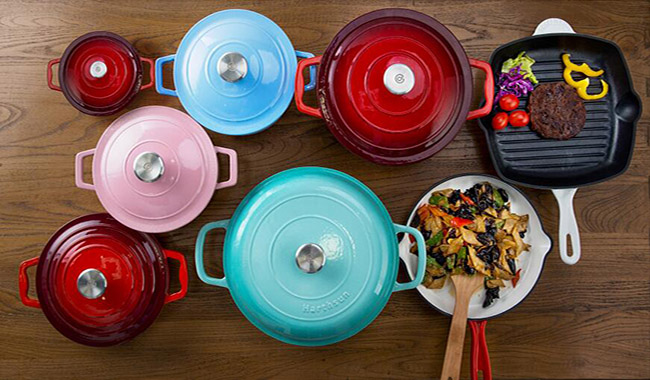
Frequently Asked Questions About Cast Iron and Enameled Cast Iron Cookware
Cast iron and enameled cast iron cookware represent the gold standard for thermal mass, heat retention, and kitchen longevity. While traditional raw cast iron requires oil polymerization (seasoning) and moisture protection to prevent rust, enameled cast iron is coated with a baked-on vitreous porcelain-glass glaze that is 100% rustproof, acid-safe, and requires zero seasoning. Both types perform exceptionally across all cooktops, including induction and high-heat ovens.
Understanding Cast Iron: Core Performance Principles
Whether you choose raw iron or porcelain-glazed cookware, understanding how these heavy-duty vessels interact with heat, food, and maintenance ensures a lifetime of flawless cooking. Below are the most critical, frequently asked questions regarding cast iron kitchenware.
Quick Comparison of Common Cast Iron Questions
| Cookware Question / Topic | Raw (Pre-Seasoned) Cast Iron Answer | Enameled Cast Iron Answer |
| Does it require seasoning? | Yes, ongoing oil polymerization is needed. | No, the vitreous glass glaze seals the surface. |
| Can you cook acidic foods (tomatoes, wine)? | No, acids strip seasoning and leach metallic flavors. | Yes, the glass surface is 100% non-reactive. |
| Is it dishwasher safe? | No, water exposure causes immediate red rust. | Hand washing is strongly recommended. |
| Can you use metal utensils? | Yes, metal spatulas and whisks are fully safe. | No, use wood, silicone, or nylon to prevent scratching. |
| Cooktop Compatibility | Gas, electric, induction, oven, open campfire. | Gas, electric, induction, oven (up to thermal limits). |
Frequently Asked Questions (FAQ)
What is the main difference between raw cast iron and enameled cast iron?
The primary difference is the surface coating. Raw cast iron consists of bare metal treated with factory oil baked into its pores, requiring regular oil seasoning and dry storage to prevent rust. Enameled cast iron is fused with a protective porcelain-glass glaze at high kiln temperatures, making it rustproof, non-reactive to acidic foods, and maintenance-free.
Can I use metal utensils on enameled cast iron cookware?
No. While raw cast iron is tough enough to handle metal spatulas, spoons, and whisks, you should avoid sharp metal utensils on enameled cast iron. Metal edges can scratch, dull, or eventually chip the glossy glass interior glaze. Always use wood, silicone, or heat-resistant nylon tools.
Why is my raw cast iron skillet sticky after seasoning?
A sticky surface is the result of applying too much oil during the oven seasoning process. When excess oil is left on the pan, it fails to polymerize completely into a hard resin, leaving behind a gummy residue. To fix it, scrub the pan clean, apply a microscopic trace of oil (wiping it completely dry until the pan looks matte), and bake it again.
Why did my enameled Dutch oven chip, and how can I prevent it?
Chipping in enameled cookware is almost always caused by physical impact—such as dropping the heavy pot onto a hard floor, banging metal utensils against the rim, or stacking pots aggressively without protective layers. Prevent chipping by handling vessels gently, using silicone rim protectors during storage, and avoiding metal tools.
Can I use soap to clean my cast iron cookware?
For enameled cast iron, mild dish soap and warm water are standard and completely safe. For raw cast iron, modern dish soap is chemically mild enough that it will not strip a well-established seasoning layer, though harsh industrial scouring chemicals should still be avoided.
Does cast iron cookware work on modern induction cooktops?
Yes. Because both raw and enameled cast iron feature a heavy, ferrous metal (iron-carbon alloy) core, they are naturally magnetic and interact perfectly with induction cooktops, providing rapid, highly efficient heating.