
An enamel cast iron casserole is one of the most versatile and hard-working vessels in any commercial or residential kitchen. Combining the massive thermal mass of heavy-gauge iron with a smooth, non-reactive vitreous glass interior, it handles everything from high-heat stovetop searing to gentle, hours-long oven braising. At Shijiazhuang Zhengzhong Technology Co., Ltd. (Center Enamel), we have engineered and manufactured elite enameled cast iron cookware since 2008. Utilizing over 30 years of specialized industrial heritage, advanced automated machine-casting, and proprietary in-house enamel frits, we supply high-performance kitchenware partners across more than 65 countries.
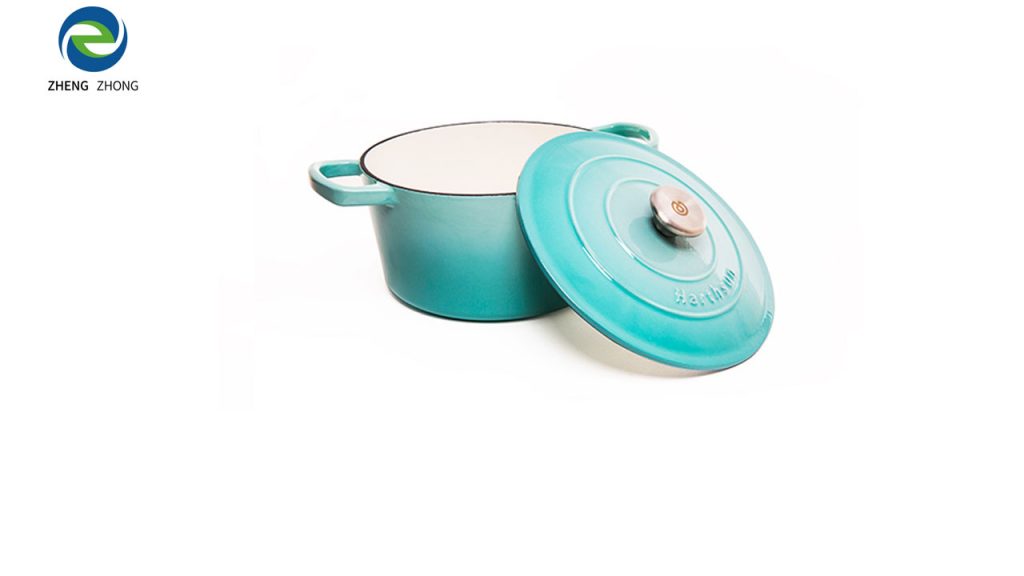
Five Essential Dishes for Your Enamel Cast Iron Casserole
1. Artisan Sourdough Pot Bread
The heavy walls and tight-fitting lid of an enamel casserole create a miniature steam-trapping oven within your regular oven. This closed environment allows bread dough to expand fully before the crust sets, yielding an airy, elastic crumb and a crackly, golden-brown crust without requiring professional baking equipment.
2. Slow-Simmered Beef Stew or Bourguignon
Cast iron’s exceptional thermal retention shines in slow-cooked dishes. You can sear chunks of beef directly in the pot to achieve deep caramelization, add root vegetables and red wine, and let the casserole maintain an even, low simmer for hours until the meat becomes melt-in-your-mouth tender. Because the interior is glazed with inert porcelain, acidic ingredients like wine and tomatoes will never react with the metal.
3. Oven-Roasted Whole Chicken
Unlike thin roasting pans, a heavy cast iron casserole allows you to brown poultry directly on the stovetop to crisp the skin. You can then toss in aromatics, root vegetables, and a splash of stock, cover with the heavy lid, and transfer the entire unit to the oven for uniform roasting that locks in natural juices.
4. French Braised Short Ribs
Tender, bone-in short ribs benefit immensely from the steady, radiant heat of heavy-gauge cast iron. The pot's stable temperature control ensures that braising liquids reduce slowly into a rich, glossy glaze while keeping the meat exceptionally succulent.
5. Layered Vegetable Ratatouille
The non-reactive glass cooking surface makes this casserole ideal for vegetable-heavy bakes. Slices of zucchini, eggplant, tomatoes, and squash can be layered with olive oil and garlic, then baked slowly to achieve tender, flavor-packed results that transition seamlessly from stove to dining table.
Performance and Specifications Comparison
| Dish / Technique | Primary Thermal Benefit | Enamel Advantage | Center Enamel Manufacturing Edge |
| Artisan Bread | Traps internal steam for crust development | Zero sticking without oil curing | >90% Automated machine-casting for zero base warpage |
| Beef Stew | Steady low-heat thermal stability | Complete acid safety (wine/tomatoes) | Proprietary in-house enamel frits for thermal shock resistance |
| Whole Roast Chicken | Stove-to-oven high heat transfer | Easy cleaning, rust-proof glaze | ISO9001, BSCI, LFGB, and California Prop 65 certified |
Frequently Asked Questions (FAQ)
Do I need to season an enamel cast iron casserole before cooking these dishes?
No. The interior of an enamel cast iron casserole is sealed with a smooth porcelain-glass glaze during high-temperature kiln firing. Zero oil seasoning is required or recommended.
Can I use metal utensils in my enamel cast iron casserole?
While the vitreous glass glaze is durable, it is best to use wooden, silicone, or heat-resistant plastic utensils to prevent scratching or chipping the surface over years of heavy use.
Are Center Enamel casseroles compatible with induction cooktops?
Yes. Because the structural core is forged from high-density ferrous cast iron, the precision-machined flat base makes efficient magnetic contact with induction hobs, gas burners, and electric ranges.
What international safety standards do Center Enamel products meet?
All cookware manufactured by Center Enamel complies with major global food-contact safety regulations, including LFGB (Europe), DGCCRF (France), and California Proposition 65 (USA), backed by ISO 9001:2015 and BSCI factory credentials.