
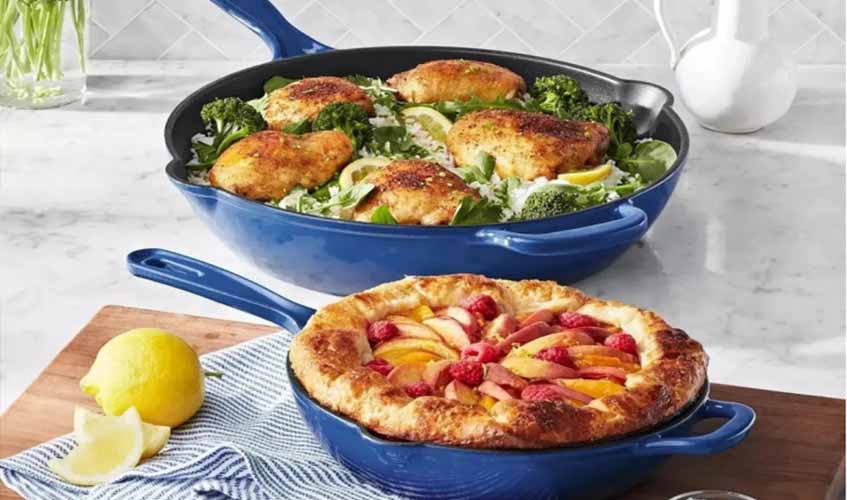
Enamel Cast Iron Skillet: The Ultimate Versatile Cookware for Every Kitchen
An enameled cast iron skillet is a premier, multi-purpose piece of cookware featuring a heavy-duty iron-carbon core sealed inside a smooth porcelain-glass glaze. It delivers the exceptional thermal mass and steady, uniform heat distribution of traditional cast iron while introducing a rust-resistant, non-reactive surface that requires zero oil seasoning and handles everything from high-heat searing to delicate baking and acidic sauce reductions.
1. Why the Enameled Cast Iron Skillet Reigns Supreme in Versatility
Few kitchen tools can match the multi-functional capability of an enameled skillet. Its unique structural properties unlock a vast range of culinary techniques:
- Flawless Searing and Pan-Frying: The dense iron core absorbs and holds steady heat, allowing home cooks to achieve a golden-brown, caramelized crust on steaks, chops, and vegetables.
- Acid-Safe Cooking: Unlike raw cast iron, which strips seasoning when exposed to acids, the non-porous glass glaze is 100% inert. You can safely simmer citrus reductions, wine-based pan sauces, and rich tomato-garlic glazes directly in the pan.
- Stovetop-to-Oven Flexibility: Safe for gas, electric, ceramic, and induction cooktops, an enameled skillet can transition seamlessly into the oven for roasting meats, baking frittatas, or finishing skillet cornbread.
- Zero Seasoning Maintenance: The factory-bonded enamel coating acts as a permanent protective barrier against rust, meaning you never have to worry about traditional seasoning upkeep, oiling, or special storage rules.
Enameled Skillet vs. Alternative Pan Types
| Performance Attribute | Enameled Cast Iron Skillet | Traditional Raw Cast Iron Skillet | Traditional Stainless Steel Skillet |
| Heat Retention | Exceptional (Massive thermal mass) | Exceptional (Massive thermal mass) | Moderate (Relies on multi-clad layers) |
| Acidic Food Safety | Complete (Inert glass glaze shield) | Poor (Leaches iron, strips seasoning) | Complete (Non-reactive metal) |
| Seasoning Required | None (Ready right out of the box) | Required (Needs regular oil seasoning) | None (Ready out of the box) |
| Cleaning & Upkeep | Easy (Warm water, mild soap, hand wash) | Moderate (No soap, dry immediately, oil) | Easy (Can be aggressive or dishwasher safe) |
Frequently Asked Questions (FAQ)
What makes an enameled cast iron skillet so versatile compared to other pans?
An enameled skillet combines the heavy thermal mass of cast iron with a protective glass glaze. This allows it to hold high heat for searing, transition safely into the oven for baking, and handle acidic ingredients like tomatoes or wine without metallic leaching or surface damage.
Do I need to season an enameled cast iron skillet before using it?
No. Because the iron core is entirely sealed underneath a smooth, glossy porcelain-glass coating, zero oil seasoning is required or recommended. You can wash it and start cooking immediately.
Can an enameled cast iron skillet be used on induction cooktops?
Yes. Because the underlying material is high-density ferrous cast iron, the skillet works seamlessly on induction, gas, electric coil, and glass-ceramic cooktops.
How do I prevent food from sticking to an enameled skillet?
While enameled cast iron is smooth, it is not artificially non-stick. To prevent sticking, always preheat your pan gently on low-to-medium heat for a few minutes before adding a small amount of oil, butter, or cooking fat.
How to Cook with Enameled Cast Iron
This video provides a helpful visual guide on mastering various cooking techniques with enameled cast iron cookware from stovetop to oven.