
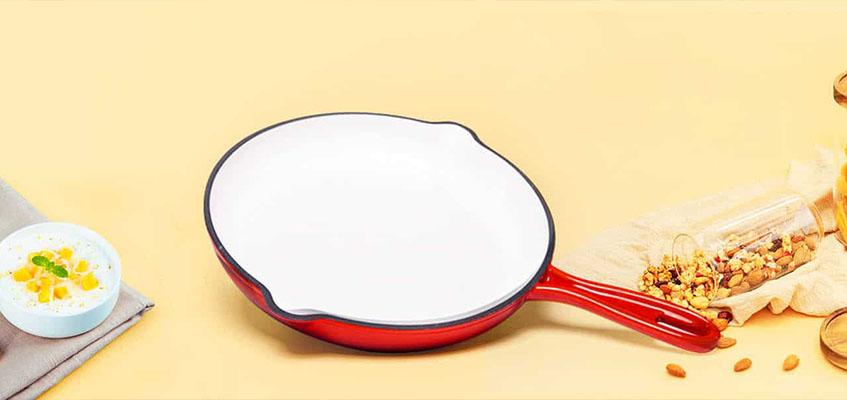
Enamel Cast Iron Pan: Something You Need To Know Before You Buy
An enamel cast iron pan is a heavy-duty cooking vessel featuring a cast iron core sealed inside a smooth, protective porcelain-glass glaze. Unlike raw cast iron, it requires zero seasoning, is completely safe for acidic foods like tomatoes and wine, and offers vibrant aesthetic appeal. However, buyers must know that they are still heavy, require gradual preheating, and need careful handling to avoid chipping the enamel coating.
1. The Core Advantages: Why Choose Enameled Cast Iron?
Before purchasing, it helps to understand what makes these pans a favorite in modern kitchens:
- Zero Seasoning Required: The smooth porcelain glaze creates a permanent, non-reactive barrier. You can use the pan straight out of the box without building up layers of oil seasoning.
- Acid-Friendly Cooking: Because iron never touches your food directly, you can simmer slow marinara sauces, wine reductions, or citrus-based dishes without metallic leaching or ruining a seasoning layer.
- Stunner on the Table: Available in a brilliant spectrum of exterior colors and gradient finishes, they transition seamlessly from stovetop or oven straight to the dining table.
2. Key Factors to Evaluate Before You Buy
Shopping for an enameled skillet or frying pan requires looking past the gorgeous colors to examine technical details:
- Interior Finish (Sand vs. Matte Black):
- Sand-colored enamel makes it easy to monitor food browning and sauce reduction.
- Matte black enamel is slightly textured, highly durable against staining, and excels at achieving deep sears and crusts.
- Weight vs. Thermal Mass: True cast iron is heavy, which is necessary for superior heat retention. Ensure you can comfortably lift the pan size you choose, especially when it is full of food.
- Heat Rules: Enameled cast iron distributes heat so efficiently that low-to-medium heat settings are almost always sufficient. Cranking an empty pan on high heat can cause thermal shock and crack the glass glaze.
Enameled Cast Iron Pan vs. Alternative Pans
| Feature / Property | Enameled Cast Iron Pan | Raw Cast Iron Skillet | Traditional Non-Stick Pan |
| Initial Prep / Seasoning | None required (Ready to use) | Required (Needs regular oil seasoning) | None required (Factory coated) |
| Acidic Food Safety | Fully Safe (Non-reactive glass glaze) | Poor (Can strip seasoning and leach iron) | Safe, but coatings degrade over time |
| Cleaning & Maintenance | Easy (Warm water, mild soap, hand wash) | Moderate (No soap, dry immediately, oil) | Easy, but short lifespan |
| Oven & Stovetop Versatility | Universal (Induction, gas, oven, broiler) | Universal, campfire-friendly | Limited (Usually not broiler safe) |
Frequently Asked Questions (FAQ)
Is an enameled cast iron pan completely non-stick?
No. Unlike synthetic non-stick pans, enameled cast iron is not inherently non-stick. You will always need to use a small amount of oil, butter, or cooking fat, and always preheat the pan gently on low-to-medium heat before adding food to prevent sticking.
Can I put my enameled cast iron pan in the dishwasher?
While some manufacturers claim their pieces are dishwasher safe, hand washing with warm water, mild soap, and a soft sponge is strongly recommended. Repeated harsh dishwasher cycles will dull the glossy exterior finish over time.
How do I prevent the enamel from chipping?
Treat your enameled pan with care by avoiding metal utensils (use silicone, wood, or nylon instead), letting the pan cool completely before washing to prevent thermal shock, and avoiding dropping it or banging heavy utensils against the rim.
Does an enameled cast iron pan work on induction cooktops?
Yes. Because the core of the pan is high-density cast iron, it is completely ferromagnetic and performs exceptionally well on induction cooktops, as well as gas, electric, and ceramic glass burners.