
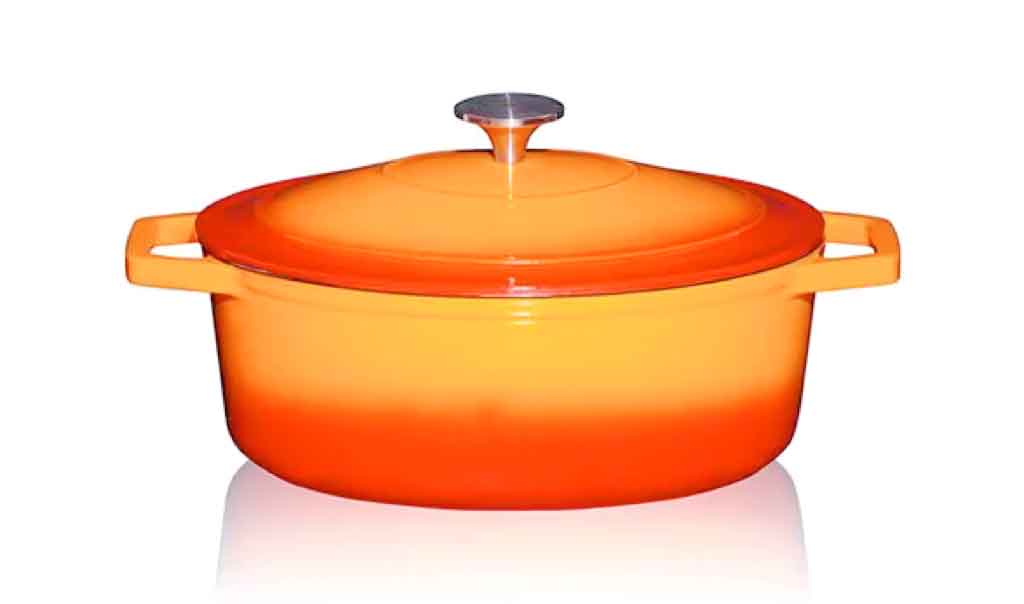
Perfectly Roasted Chicken in an Enamel Cast Iron Oval Casserole: The Ultimate Guide
Roasting a whole chicken in an enamel cast iron oval casserole offers superior spatial ergonomics compared to round pots, comfortably accommodating the bird alongside root vegetables while utilizing the vessel's heavy thermal mass for even cooking. To achieve ultra-crispy skin and succulent, tender meat, preheat your oval casserole in a 200°C (400°F) oven, pat the chicken thoroughly dry, season generously, and roast uncovered or partially covered to let the porcelain-glass glaze lock in natural juices.
1. Why the Oval Casserole is the Ultimate Roasting Vessel
While round Dutch ovens excel at soups and round loaves of bread, the oval casserole is specifically engineered for oblong poultry and roasts:
- Optimal Spatial Fit: The elongated shape provides extra clearance at the ends of the pot, allowing you to tuck in potatoes, carrots, onions, and garlic bulbs right alongside a 4-to-6-pound whole chicken without overcrowding.
- Superior Thermal Mass: The dense iron-carbon core absorbs and radiates steady, uniform heat from all directions, cooking the bird evenly from the inside out while browning the exterior.
- Self-Basting Lid Design: Heavy, condensation-collecting lids capture rising moisture and continuously drizzle natural juices back down over the chicken, preventing it from drying out.
2. Step-by-Step Guide: Golden Roast Chicken in an Oval Casserole
Step 1: Prep and Dry the Bird
Remove your whole chicken from the refrigerator 30 minutes before cooking. Pat the skin completely dry with paper towels. Surface moisture is the enemy of crispy skin. Season the cavity generously with salt, pepper, a lemon half, and fresh herbs (like rosemary and thyme). Truss the legs loosely with kitchen twine for even cooking.
Step 2: Bed of Aromatics
Toss baby potatoes, quartered carrots, and shallots in olive oil, salt, and pepper. Scatter them across the bottom of your pre-warmed enamel oval casserole to create a flavorful rack that elevates the chicken slightly off the base.
Step 3: Roast to Perfection
Place the seasoned chicken breast-side up on top of the vegetables. Roast uncovered in a preheated oven at 200°C (400°F) for roughly 50 to 75 minutes (depending on weight), or until an instant-read thermometer inserted into the thickest part of the thigh reads 74°C (165°F).
Step 4: Rest Before Carving
Transfer the roasted chicken to a cutting board and let it rest for 15 minutes before carving. This allows the juices to redistribute evenly throughout the meat while the casserole keeps your roasted vegetables warm inside the pot.
Roasting Vessel Comparison
| Feature / Property | Enamel Cast Iron Oval Casserole | Traditional Metal Roasting Pan | Glass Baking Dish |
| Heat Retention | Exceptional (Dense iron-carbon thermal mass) | Low (Thin metal cools quickly) | Moderate (Holds heat once warm, but slow to heat) |
| Moisture Control | High (Self-basting heavy lid locks in steam) | Low (Open pan requires manual basting) | Moderate (Requires foil tenting) |
| Table Presentation | High (Vibrant enamel exterior and color gradients) | Low (Utilitarian metal look) | Moderate (Standard clear glass look) |
| Stovetop Versatility | Yes (Can sear veggies/gravy on stovetop first) | Yes (If flame-safe metal) | No (Unsafe for direct stovetop burners) |
Frequently Asked Questions (FAQ)
Why use an oval casserole instead of a round Dutch oven for a whole chicken?
An oval casserole is specifically shaped to fit the natural geometry of a whole chicken. It leaves extra room at the ends of the pot for root vegetables like potatoes and carrots, preventing overcrowding and ensuring everything cooks evenly.
Should I cover the casserole while roasting a chicken?
For the crispiest skin, roast the chicken uncovered for the majority of the cooking time. If you prefer a softer, ultra-tender braised texture, you can cover the pot for the first 30 minutes, then remove the lid during the final 20 minutes to brown the skin.
Do I need to add liquid to the bottom of the oval casserole?
You do not need to add water or broth because a whole chicken naturally releases plenty of juices as it roasts. However, adding a splash of white wine, chicken stock, or olive oil to your vegetable bed helps build an incredible pan sauce.
How do I clean my enamel oval casserole after roasting sticky poultry juices?
Let the casserole cool completely, then fill it with warm water and a tablespoon of baking soda. Let it soak for 15 minutes to lift any roasted-on residues, then wash gently with a soft sponge and mild dish soap. Avoid abrasive scouring pads.