
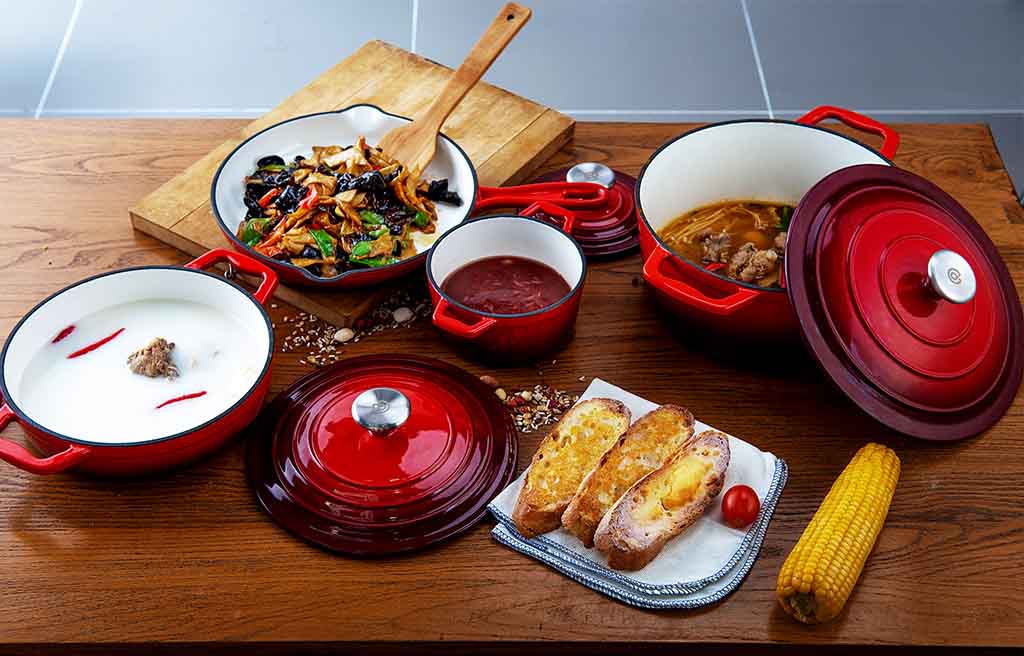
Enamel Cast Iron Cookware: The Safest and Healthiest Choice for Your Kitchen
Enamel cast iron cookware is widely recognized as one of the safest cookware choices available today because its heavy-duty iron-carbon core is completely sealed beneath a non-porous, inert porcelain-glass glaze. Unlike synthetic non-stick pans that can degrade and release harmful chemicals when overheated, or raw cast iron that can leach excess iron and react with acidic foods, enameled cast iron provides a 100% non-toxic, chemical-free cooking surface certified under stringent global food safety standards such as LFGB and California Proposition 65.
1. Why Material Safety Matters in Modern Kitchens
As home cooks become increasingly mindful of what enters their food, evaluating the chemical makeup of pots and pans has taken center stage. Enamel cast iron addresses the primary safety concerns associated with alternative cookware:
- Zero Synthetic Chemicals (No PTFE or PFOA): Traditional non-stick coatings rely on chemical polymers that can break down at high temperatures. Enameled cast iron uses a natural, kiln-fired glass coating that contains zero plastic derivatives, ensuring no toxic fumes are ever released.
- Inert, Non-Reactive Surface: The porcelain glaze acts as a permanent barrier between the metal and your food. This prevents raw metal exposure and ensures that cooking oils or ingredients never interact chemically with reactive substrates.
- Heavy Metal Compliance: Premium enameled cookware undergoes rigorous testing to guarantee that the glaze contains zero harmful levels of lead, cadmium, or other heavy metals, satisfying strict international food-contact regulations.
2. Complete Protection Against Leaching and Rust
One of the greatest safety and health benefits of enameled cast iron is its versatility with acidic and reactive foods:
- Safe for High-Acid Ingredients: Tomatoes, citrus juices, vinegar, and wine can strip seasoning from raw cast iron and cause metallic leaching. The glass-smooth enamel glaze is completely impervious to acids, preserving the pure flavor and safety of your meal.
- Natural Oxidation Prevention: Because the iron core is fully encapsulated by vitreous enamel, moisture cannot oxidize the metal. This eliminates rust formation, ensuring your cooking surface remains pristine and hygienic over decades of daily use.
Cookware Material Safety & Toxicity Comparison
| Cookware Material | Synthetic Chemical Risk (PTFE/PFOA) | Acidic Food Safety | Heavy Metal & Toxicity Control | Durability & Stability |
| Enamel Cast Iron | Zero (100% glass-porcelain glaze) | Complete (Inert, non-reactive shield) | Rigidly Certified (LFGB, Prop 65 compliant) | Heirloom Grade (Decades of stable use) |
| Traditional Non-Stick | High (Coatings degrade and peel over time) | Complete (Unless coating is scratched) | Variable (Dependent on manufacturer quality) | Low to Moderate (Short lifespan of 2–5 years) |
| Raw Cast Iron | Zero (Pure iron alloy) | Poor (Leaches iron, strips seasoning) | Variable (Requires careful oil maintenance) | Heirloom Grade (Virtually indestructible if maintained) |
| Uncoated Aluminum | Zero (Pure metal) | Poor (Reactions leach aluminum into food) | Moderate (Soft metal prone to pitting) | Moderate (Dents and warps easily) |
Frequently Asked Questions (FAQ)
Is enameled cast iron cookware completely free of toxic chemicals?
Yes. Quality enameled cast iron is made from natural iron and a vitreous porcelain-glass glaze. It contains no synthetic non-stick polymers, PTFE, PFOA, lead, or cadmium, making it entirely free of harmful chemical emissions.
Does enameled cast iron leach heavy metals into food?
No. Reputable manufacturers test their enamel frits extensively to ensure they meet international food-grade standards like LFGB (Europe) and California Proposition 65 (USA), guaranteeing that no heavy metals migrate into your food during cooking.
Can I safely cook acidic foods like tomato sauce in enameled cast iron?
Yes, absolutely. Because the glass enamel glaze is non-reactive, you can simmer high-acid ingredients like tomatoes, wine reductions, and citrus marinades for hours without any metallic taste transfer or surface damage.
How do international safety certifications protect consumers?
Certifications like ISO9001, LFGB, and DGCCRF verify that both the raw materials and the high-temperature kiln-firing processes adhere to rigorous safety protocols, ensuring the cookware is 100% safe for everyday household use.