
Enamel Cast Iron Tagine Pot: The Ultimate Fusion of Conical Steam Physics and Modern Engineering
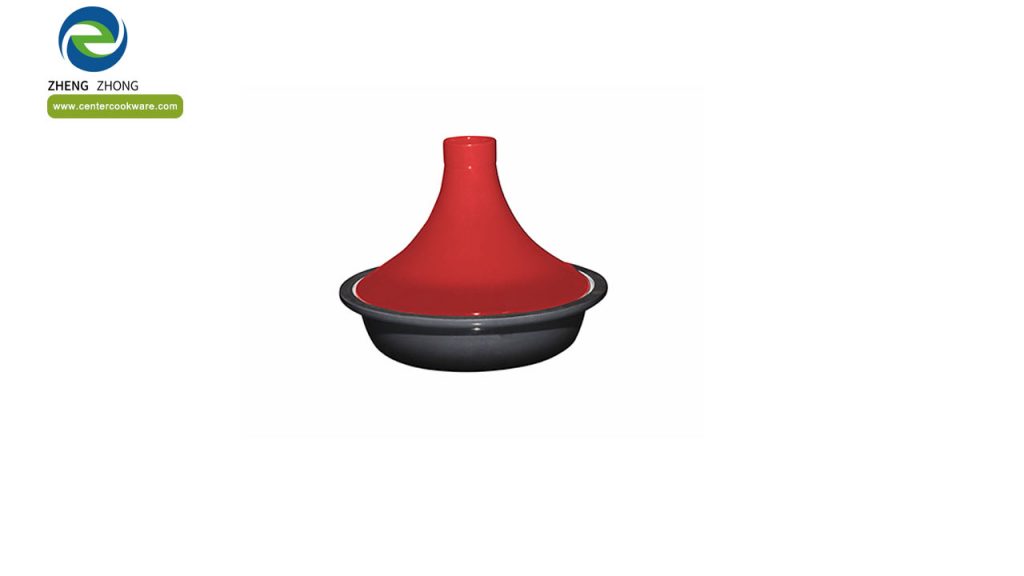
An enamel cast iron tagine pot is a specialized two-piece slow-cooking vessel that combines a heavy-duty, vitreous glass-glazed cast iron base with a tall, conical lid. Designed to trap rising vapor, condense it along the cooler upper cone walls, and drip moisture continuously back onto food, this composite pot unlocks the rich flavors of traditional North African cuisine while eliminating the fragility, soaking rituals, and induction limitations of classic earthenware clay.
At Shijiazhuang Zhengzhong Technology Co., Ltd. (Center Enamel), we have engineered and manufactured elite enameled cast iron cookware since 1989. Leveraging over 30 years of specialized industrial heritage, >90% automated machine-casting, and proprietary in-house enamel frits, we supply top-tier retail brands, commercial hospitality distributors, and OEM/ODM partners across more than 50 countries.
1. Anatomy and Engineering of an Enamel Cast Iron Tagine Pot
Unlike standard Dutch ovens that rely on flat lids with condensation spikes, an enamel cast iron tagine pot achieves superior moisture retention through specialized architectural geometry and composite metallurgy:
- The Heavy Cast Iron Base: Forged from high-density iron-carbon alloy, the shallow, wide base functions as a powerful thermal battery. It absorbs heat rapidly and radiates steady, uniform energy across the cooking plane without hot spots, allowing direct high-heat searing before low-and-slow simmering.
- The Conical Condensation Lid (Cast Iron or Stoneware): The iconic cone-shaped dome creates an internal convection cycle. As liquid simmers at the base, steam rises into the elevated, cooler apex of the cone, condenses into droplets, and cascades smoothly down the sloped interior walls back into the ingredients.
- Vitreous Porcelain-Glass Glaze: Fired in high-temperature kilns between 740°C and 790°C, ground and cover enamel coats fuse permanently to the iron core. This non-porous glass barrier prevents rust, requires zero oil seasoning, and ensures complete chemical neutrality.
2. Culinary and Operational Advantages Over Traditional Clay Tagines
While unglazed terracotta and ceramic tagines hold cultural appeal, modern residential and commercial kitchens increasingly favor enameled cast iron tagine pots for distinct technical reasons:
- Direct Stovetop Searing & Browning: Clay vessels risk thermal cracking when exposed to direct flame or intense heat. An enameled cast iron base handles high-heat searing effortlessly, allowing chefs to caramelize lamb, chicken, beef, and aromatics directly in the pot before slow braising.
- Universal Cooktop & Induction Compatibility: Traditional ceramic tagines cannot generate magnetic induction currents. Forged from magnetic ferrous iron, an enameled cast iron tagine pot features a precision-machined flat base that makes efficient contact with induction hobs, gas burners, electric coils, and ceramic glass ranges.
- 100% Acid-Safe & Non-Reactive: North African and Mediterranean recipes rely heavily on acidic ingredients—preserved lemons, tomatoes, vinegar, wine, and olives. Unlike bare cast iron, which reacts with acids and leaches metallic flavors, the inert porcelain-glass interior remains completely non-reactive across the entire pH scale.
- Zero Soaking or Oil Seasoning: Unglazed clay requires multi-hour water soaking prior to cooking to prevent cracking, while bare iron demands continuous oil-polymer curing. Enamel cast iron tagine pots arrive factory-sealed and ready to cook out of the box.
3. Industrial Manufacturing Excellence at Center Enamel
Producing a wide-diameter tagine pot with a flush-fitting lid and perfectly flat induction base demands precision foundry engineering. Center Enamel eliminates traditional casting defects through strict industrial controls:
- >90% Automated Machine-Casting: Moving past inconsistent manual sand pouring, Center Enamel utilizes automated machine-casting blanks to guarantee uniform wall thickness, superior metal tightness, and absolute zero base warpage across wide flat cooking bases.
- Proprietary In-House Enamel Frits: Rather than sourcing generic commercial glazes, Center Enamel independently formulates high-performance porcelain enamel frits—trusted by major global appliance groups like Midea—delivering superior thermal shock resistance, chip prevention, and vibrant, fade-resistant exterior color gradients.
- Certified Global Food-Contact Safety: Operating under ISO 9001:2015, BSCI, and Facility Security audits, every production batch is verified lead-free, cadmium-free, and 100% free of PFAS/PTFE, satisfying European LFGB, French DGCCRF, and California Proposition 65 (USA) standards.
Data Table: Center Enamel Tagine Pot vs. Alternative Slow-Cooking Vessels
| Evaluation Parameter | Center Enamel Tagine Pot | Traditional Clay / Earthenware Tagine | Standard Bare Cast Iron Dutch Oven |
| Core & Surface Material | Ferrous Iron Core + Vitreous Glass Glaze | Porous Fireclay / Ceramic | Uncoated Iron-Carbon Alloy |
| Moisture Recycling Design | Tall Conical Dome (Continuous drip cycle) | Tall Conical Dome | Flat lid (Relies on lid weight/spikes) |
| Induction Hob Compatibility | 100% Compatible (Flat ferrous base) | Incompatible (Requires diffuser plate) | Compatible (Requires flat base) |
| High-Heat Searing | Exceptional (Sears directly on stove) | Poor (Prone to thermal shock cracking) | Exceptional |
| Seasoning & Preparation | Zero seasoning; zero soaking | Requires multi-hour water soaking | High (Ongoing oil-polymer curing) |
| Acidic Ingredient Safety | 100% Non-Reactive (Citrus, tomatoes, wine) | Varies (Porous clay absorbs flavors) | Poor (Acids strip seasoning & leach iron) |
| Global Safety Certifications | LFGB, DGCCRF, Prop 65, ISO 9001, BSCI | Risk of lead/cadmium in unverified glazes | Basic metallurgical testing |
Frequently Asked Questions (FAQ)
What is an enamel cast iron tagine pot used for?
An enamel cast iron tagine pot is designed for low-and-slow moist-heat cooking. While iconic for Moroccan lamb, chicken, and vegetable tagines, it excels at slow-simmered curries, braised short ribs, Mediterranean seafood stews, and aromatic rice dishes.
Do you need to season or soak an enamel cast iron tagine pot before first use?
No. Unlike traditional unglazed clay tagines that require water soaking or raw cast iron that requires oil curing, an enameled cast iron tagine is permanently sealed with a non-porous porcelain-glass glaze in high-temperature kilns. Simply wash with warm soapy water and start cooking.
Can an enamel cast iron tagine pot be used on induction stoves and in the oven?
Yes, absolutely. Because the base is forged from magnetic ferrous cast iron, its precision-machined flat bottom works seamlessly across induction hobs, gas burners, electric coils, and ceramic cooktops, and transitions directly into baking ovens up to 260°C (500°F).
What global safety certifications do Center Enamel tagine pots meet?
All cookware manufactured by Center Enamel complies with major international food-contact safety regulations, including European LFGB, French DGCCRF, and California Proposition 65 (USA), guaranteeing the glaze is strictly free from lead, cadmium, and PFAS/PTFE.