
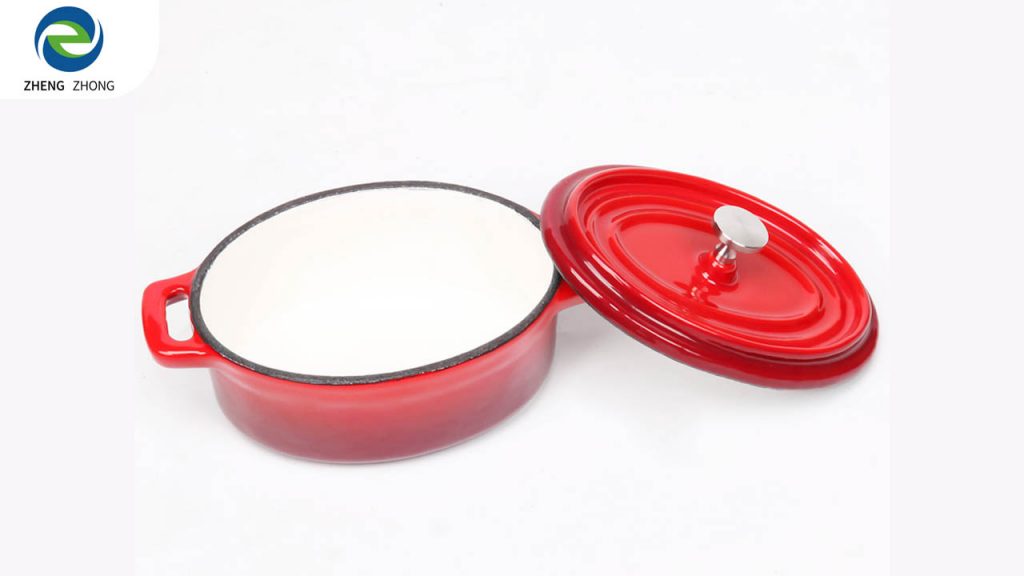
Enamel Cast Iron Oval Casserole: A Timeless Kitchen Essential
For generations, heavy-duty cookware has served as the backbone of home and professional kitchens, but few pieces offer the unique spatial and thermal benefits of the enamel cast iron oval casserole. By combining an elongated geometry with a high-density iron-carbon thermal core and a protective porcelain-glass glaze, this classic vessel is uniquely engineered to master everything from whole Sunday roasts to delicate braised fish and artisan sourdough.
1. Why the Oval Shape Outperforms Traditional Round Pots
While round Dutch ovens are brilliant for stews and soups, the elongated profile of an oval casserole introduces distinct culinary advantages:
- Accommodating Whole Poultry and Roasts: The natural curve of an oval pot provides extra interior length, allowing whole chickens, turkeys, crown roasts, briskets, and racks of ribs to fit comfortably without crowding.
- Optimized Air and Heat Circulation: The elongated interior promotes optimal thermal air convection around large, irregularly shaped cuts of meat, ensuring even browning and tender, succulent textures.
- Space-Saving Footprint: Despite holding large capacities, the narrower profile of an oval casserole fits more efficiently on crowded stovetop burners or alongside other dishes inside standard oven cavities.
2. The Power of Enameled Cast Iron: Performance Meets Convenience
Pairing the classic thermal properties of cast iron with a vitreous porcelain-glass glaze eliminates traditional maintenance hurdles while enhancing everyday cooking:
- The Thermal Battery Effect: The dense iron-carbon core absorbs, stores, and steadily radiates massive amounts of thermal energy. When cold ingredients are added, the pot resists temperature drops, securing deep caramelization and stable, slow-simmer braises.
- Zero Seasoning Required: Unlike raw cast iron that demands constant oil polymer seasoning and rust vigilance, the smooth glass enamel completely seals the metal, offering a rust-resistant, low-maintenance cooking surface.
- 100% Acid-Safe Cooking: The inert enamel barrier allows you to simmer heavy tomato sauces, citrus reductions, and wine marinades for hours without metallic leaching or surface corrosion.
Data Table: Oval Casserole vs. Round Dutch Oven vs. Rectangular Roaster
| Feature / Metric | Enamel Cast Iron Oval Casserole | Traditional Round Dutch Oven | Rectangular Ceramic Roaster |
| Best Suited For | Whole roasts, poultry, fish, and long cuts | Soups, stews, round sourdough loaves | Lasagna, baked gratins, sheet-pan meals |
| Thermal Heat Retention | Exceptional (Dense iron-carbon core) | Exceptional (Dense iron-carbon core) | Low to Moderate (Prone to rapid cooling) |
| Direct Stovetop & Induction Use | Universal (Gas, induction, electric, oven safe) | Universal (Gas, induction, electric, oven safe) | Restricted (Oven only; cracks on direct flame) |
| Table Presentation Appeal | Stunning (Vibrant enamel color gradients) | Classic (Traditional heritage shape) | Utilitarian (Baking dish aesthetic) |
Frequently Asked Questions (FAQ)
What is the primary benefit of an enamel cast iron oval casserole?
The primary benefit is its elongated shape, which makes it ideal for roasting whole chickens, fish, or large cuts of meat that do not fit comfortably in a standard round pot.
Does an enamel oval casserole require oil seasoning?
No. The pot features a smooth porcelain-glass glaze that permanently seals the iron underneath. Zero oil seasoning is required or recommended.
Can an oval cast iron casserole be used on an induction cooktop?
Yes. Because the core is forged from ferrous cast iron, the flat base makes efficient magnetic contact with induction burners, as well as gas, electric, and ceramic glass cooktops.
How do I clean burned-on food residues from the interior?
Allow the casserole to cool completely, then fill it with warm water and a tablespoon of baking soda to soak and loosen stubborn residue. Wash gently using a soft sponge and mild dish soap, avoiding abrasive steel wool pads.