
The Timeless Elegance and Durability of Enamel Cast Iron Cookware
Enamel cast iron cookware represents a rare intersection of heirloom-grade durability and sophisticated kitchen aesthetics. By fusing a dense, high-capacity iron-carbon alloy core with an inorganic vitreous glass (porcelain enamel) coating at high kiln temperatures (740°C to 790°C), this cookware achieves total immunity to rust and acid corrosion. It delivers the supreme thermal retention of raw cast iron while eliminating maintenance hurdles, offering a brilliant, chip-resistant finish that transitions effortlessly from stovetop burners to formal dining tables.
1. The Intersection of Art and Metallurgy: Aesthetic Elegance
While modern kitchen trends come and go, enameled cast iron has remained a staple of refined interior design and culinary art for generations.
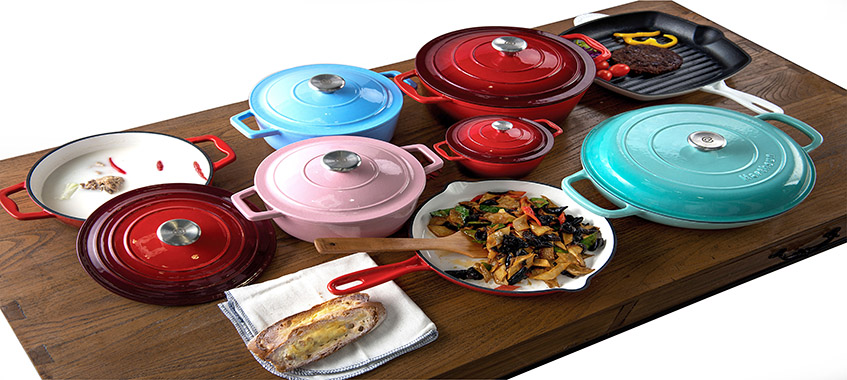
- Stove-to-Table Presentation: Unlike utilitarian stainless steel or utilitarian aluminum pans that are often hidden away after cooking, enameled cookware features vibrant exterior glosses, deep gradients, and rich matte textures. It serves as an elegant serving dish that enhances the visual appeal of any dining table.
- Design Versatility: Available in classic silhouettes and trendy modern shapes—ranging from French Dutch ovens and shallow braisers to vibrant square grill pans—these pieces bring a pop of timeless color and sophistication to open-shelf kitchen displays.
2. Engineered for Generations: The Science of Durability
True durability in cookware is measured by how well a vessel withstands structural fatigue, thermal shock, and chemical degradation over decades of daily use. Enameled cast iron excels across all three metrics:
- Permanent Corrosion Resistance: Raw cast iron is notoriously vulnerable to moisture, developing red rust quickly if left unseasoned. The baked-on vitreous porcelain glaze completely seals the iron core from water and oxygen, making the pot permanently rustproof.
- Acid Neutrality: The glass surface is entirely non-reactive across the entire pH spectrum. Chefs can simmer highly acidic ingredients—such as tomato sauces, wine reductions, and citrus braises—for hours without metallic leaching or surface pitting.
- Zero Seasoning Maintenance: Because the cooking surface is sealed glass, it requires no oil-polymerization (seasoning) rituals. It maintains its clean, hygienic performance year after year with simple soap-and-water handwashing.
3. The Modern Manufacturing Standard: Machine-Casting
The longevity of enameled cookware begins in the foundry. Legacy manual sand-casting often introduces micro-porosities and irregular wall thicknesses that fail under intense thermal stress.
Today's highest-tier manufacturers utilize automated machine casting to ensure maximum structural tightness. Machine-cast blanks offer superior resistance to thermal deformation, a smooth surface profile that optimizes enamel-to-metal bonding, and uniform thickness that prevents localized hot spots. When paired with independently developed in-house enamel frits, this manufacturing rigor guarantees a cookware piece built to last a lifetime.
Data Table: Enameled Cast Iron vs. Traditional Cookware Materials
| Performance Metric | Enameled Cast Iron Cookware | Raw Seasoned Cast Iron | Stainless Steel Cookware |
| Corrosion / Rust Immunity | 100% Protected (Glass-sealed) | Low (Requires diligent oil seasoning & drying) | High (Resists rust, but prone to pitting) |
| Acidic Food Compatibility | Complete (Non-reactive glass glaze) | Low (Acids strip seasoning and leach iron flavor) | Complete (Inert metal surface) |
| Thermal Mass & Retention | Exceptional (Stores and radiates heat evenly) | Exceptional (Heavy thermal battery) | Low to Moderate (Requires rapid heat adjustments) |
| Aesthetic Appeal | High (Vibrant gloss/gradient exterior finishes) | Utilitarian (Industrial black appearance) | Functional (Polished silver metallic finish) |
Frequently Asked Questions (FAQ)
Why is enameled cast iron considered a timeless kitchen investment?
Enameled cast iron combines heavy-duty metallurgical strength with a permanent glass coating that never rusts or degrades. Because it does not require seasoning and resists staining or acid corrosion, a well-made piece can last for decades, frequently passing down as a family heirloom.
Does the enamel coating scratch or chip easily?
High-quality, machine-cast enameled cookware is fired at extreme kiln temperatures to create a strong bond between the glass and iron. While it is exceptionally durable against normal cooking wear, it can chip if dropped onto hard floors or struck forcefully with sharp metal utensils. Using wooden or silicone tools easily prevents surface damage.
Can I cook acidic foods in an enameled cast iron pot?
Yes. Unlike raw cast iron—which reacts poorly to high-acid ingredients like tomatoes, vinegar, and wine—the smooth vitreous glass interior of enameled cookware is completely inert, allowing you to simmer acidic sauces for hours without metallic taste transfer.
Do I need to season enameled cast iron before using it for the first time?
No. The baked-on porcelain enamel layer completely seals the iron core underneath, meaning the cookware is ready to use immediately out of the box and requires zero oil seasoning.