
Enamel Cast Iron Cookware: Pros and Cons
As professional kitchens and residential home cooks look for optimal balance between performance, health safety, and low maintenance, enameled cast iron cookware has become an essential kitchen standard. Merging the massive thermal mass of heavy iron with a smooth, non-reactive porcelain-glass glaze, enameled cookware solves many traditional limitations of bare iron while introducing specific operational trade-offs.
At Shijiazhuang Zhengzhong Technology Co., Ltd. (Center Enamel), we have engineered and manufactured elite enameled cast iron cookware since 1989. With more than 30 years of specialized industrial heritage, we combine automated machine-casting with proprietary enamel frit R&D to supply top-tier partners across more than 65 countries.
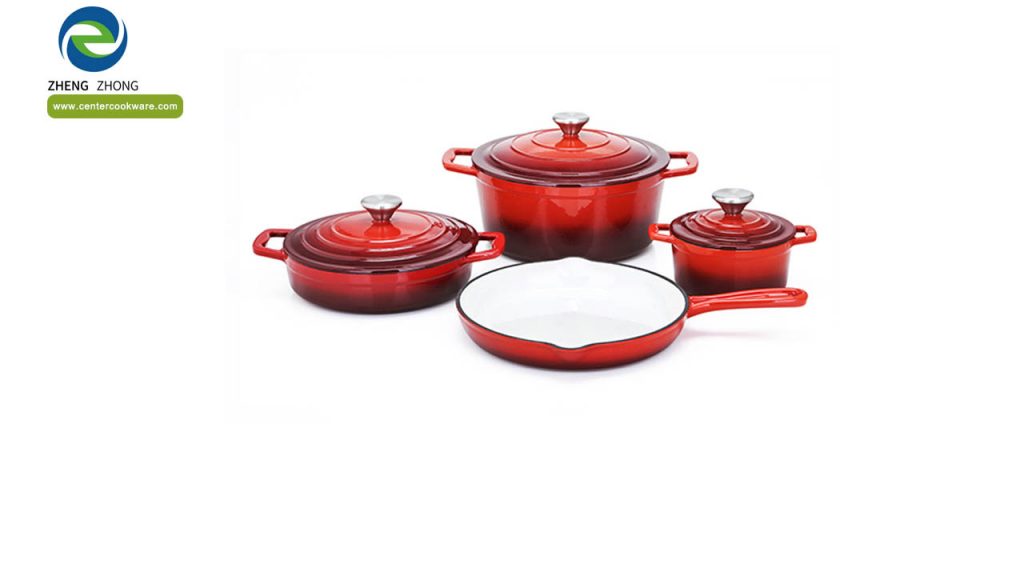
1. The Key Advantages of Enameled Cast Iron
The growing global preference for enameled cast iron is driven by several distinct performance and maintenance benefits:
- Zero Seasoning Required: Unlike traditional bare cast iron that demands continuous oil-polymer curing, the factory-applied vitreous glass glaze provides an instant, smooth release surface right out of the box.
- Complete Acid Safety: The non-porous porcelain interior allows home and professional chefs to simmer highly acidic ingredients—such as wine reductions, citrus marinades, or tomato sauces—for hours without metallic leaching or surface corrosion.
- Absolute Rust Protection: The glass-enamel shield encapsulates the underlying iron completely, eliminating oxidation and making maintenance effortless even in humid environments.
- Massive Thermal Retention: Forged from high-density iron-carbon alloy, thick-walled enameled pots absorb and steadily radiate thermal energy, securing deep caramelization and stable long-term simmering.
- Vibrant Aesthetic Appeal: Brilliant exterior color gradients and timeless silhouettes allow seamless transitions from stovetop braising straight to elegant tabletop presentation.
2. Potential Drawbacks and Limitations
While enameled cast iron offers exceptional long-term value, understanding its limitations ensures optimal handling and product longevity:
- Substantial Weight: Due to its dense iron core, heavy-gauge cookware can be challenging to lift or transport when loaded with food or large volumes of liquid.
- Risk of Chipping: While the vitreous glass glaze is fused at extreme temperatures (740°C–790°C), severe thermal shock or physical impacts from metal utensils can cause chipping on rims or cooking surfaces.
- Higher Initial Investment: Precision manufacturing, automated machine-casting, and rigorous safety compliance make enameled pieces more costly upfront than thin stamped metal alternatives.
- Slower Initial Heating: Because of its thick structural mass, enameled cast iron takes longer to preheat compared to thin aluminum or stainless steel, requiring moderate preheating phases.
Data Table: Pros and Cons at a Glance
| Feature / Parameter | Advantages (Pros) | Limitations (Cons) | What It Means in Practice |
| Surface Treatment | Zero oil seasoning needed | Surface cannot be re-seasoned if chipped | Low maintenance, but requires careful utensil handling |
| Acidic Cookery | Complete non-reactive safety | None | Safely cook tomatoes, wine, and citrus without metallic taste |
| Thermal Mass | Exceptional heat retention | Slower initial warmup phase | Ideal for steady braises and sears; requires moderate preheating |
| Corrosion Defense | 100% Rust-proof glass barrier | Vulnerable to heavy physical impact | No rust in humid storage, but avoid dropping or abrasive impacts |
| Weight & Handling | Structural stability on burners | Heavy to lift when full | Excellent for stationary cooking stability; heavy for wrist lifting |
Industrial Manufacturing Excellence at Center Enamel
Maximizing the advantages while minimizing structural limitations relies heavily on elite foundry engineering. At Center Enamel, our production protocols address these factors directly:
- >90% Automated Machine-Casting: Eliminates structural inconsistencies and uneven wall thickness, guaranteeing absolute zero warpage across wide flat cooking planes.
- Proprietary In-House Enamel Frits: Independently developed porcelain glazes deliver superior thermal shock resistance and brilliant color stability, earning us the trust of major industrial partners like Midea, China's largest small home appliance group.
- Rigorous Global Compliance: Certified under ISO9001-2015, BCSI, and Facility Security, our collections satisfy strict international food-contact safety standards, including LFGB (Europe), DGCCRF (France), and California Proposition 65 (USA).
Frequently Asked Questions (FAQ)
What are the main pros and cons of enameled cast iron cookware?
The primary pros include zero-seasoning convenience, complete rust resistance, and non-reactive acid safety for cooking tomatoes and wine. The main cons include heavy physical weight and vulnerability to chipping if struck hard or subjected to severe thermal shock.
Does enameled cast iron require oil seasoning before use?
No. Enameled cast iron is fused with a smooth porcelain-glass glaze that completely seals the iron underneath, providing a ready-to-use surface right out of the box without any oil-polymer curing.
Can acidic foods damage enameled cast iron cookware?
No. Because the interior coating is an inert glass glaze, highly acidic ingredients like citrus, wine, and tomato sauces will not react withల్య the metal or leach metallic flavors into your food.
What international safety standards do Center Enamel collections satisfy?
All cookware manufactured by Center Enamel meets or exceeds major global food-contact safety regulations, including LFGB (Europe), DGCCRF (France), and California Proposition 65 (USA), backed by ISO 9001:2015 and BSCI factory credentials.