
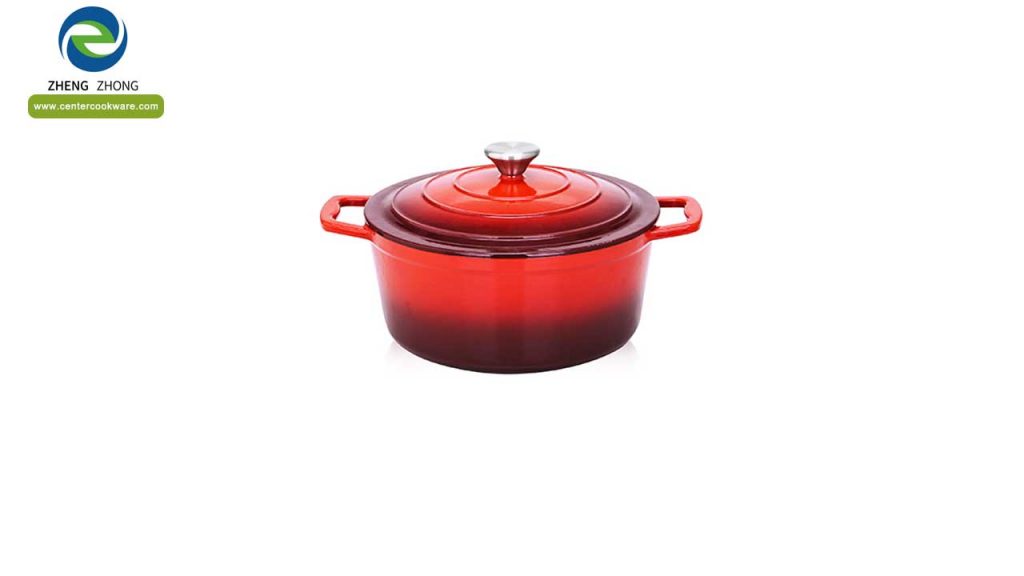
What Is an Enamel Cast Iron Casserole? The Ultimate Kitchen Heirloom
In the culinary world, few vessels command as much respect and long-term utility as the enamel cast iron casserole (frequently referred to as a Dutch oven). Combining the massive thermal performance of heavy-duty iron with a smooth, protective glass glaze, this cookware piece bridges centuries-old foundry traditions with modern, maintenance-free kitchen convenience. Shijiazhuang Zhengzhong Technology Co., Ltd—internationally recognized as Center Enamel—has spent over three decades perfecting this high-performance balance since 1989, supplying elite cookware partners across more than 50 countries.
1. Defining the Enamel Cast Iron Casserole
At its core, an enameled cast iron casserole is a thick-walled cooking pot forged from molten iron-carbon alloy and permanently bonded with a vitreous porcelain-glass glaze.
- The Iron-Carbon Core: Provides exceptional structural density and heavy thermal mass, ensuring that heat is absorbed, stored, and radiated steadily across the entire base and walls.
- The Vitreous Enamel Glaze: Fused to the iron at extreme industrial temperatures, this glass-based coating creates a 100% inert, non-porous barrier that completely eliminates the need for seasoning while protecting the metal from rust.
2. Core Advantages: Why Choose Enameled Cast Iron?
Replacing high-maintenance bare iron or thin stainless steel with an enameled casserole introduces several distinct structural and culinary benefits:
- Zero Seasoning Required: Unlike raw cast iron that demands continuous oil curing, the factory-glazed glass surface is naturally ready to use right out of the box.
- Complete Acid Safety: Because the glass glaze is chemically inert, home chefs can simmer highly acidic ingredients—such as wine reductions, citrus marinades, and tomato-based sauces—for hours without metallic leaching or flavor alteration.
- Self-Basting Condensation Design: Heavy lids fitted with internal condensation dots or spikes capture rising moisture, causing it to drip back onto the food uniformly for tender, perfectly braised meats.
- Stove-to-Table Aesthetics: Available in brilliant color gradients and vibrant finishes, these casseroles transition seamlessly from induction cooktops or ovens directly to the dining table as an elegant serving centerpiece.
Data Table: Enamel Cast Iron Casserole vs. Alternative Cookware
| Feature / Metric | Enamel Cast Iron Casserole | Traditional Raw Cast Iron | Standard Stainless Steel Pot |
| Seasoning Requirement | None (Factory glass-sealed surface) | High (Requires ongoing oil polymer seasoning) | None (Non-reactive metal surface) |
| Acidic Food Safety | Complete (Inert porcelain glaze prevents reactions) | Poor (Acids strip seasoning and leach iron) | Complete (Non-reactive metal) |
| Rust Resistance | Absolute (Glass coating seals out moisture) | Low (Prone to oxidation if left wet) | High (Corrosion-resistant alloy) |
| Thermal Heat Retention | Exceptional (Dense iron core holds steady heat) | Exceptional (Dense iron core holds steady heat) | Low to Moderate (Thin base loses heat quickly) |
Frequently Asked Questions (FAQ)
What is an enamel cast iron casserole primarily used for?
An enameled cast iron casserole is an incredibly versatile multi-tasker used for slow-cooking stews, braising meats, simmering soups, baking artisan bread, roasting poultry, and deep frying across both stovetops and ovens.
Does an enameled casserole require oil seasoning before first use?
No. The permanent porcelain-glass glaze completely seals the underlying iron, meaning zero oil seasoning is required or recommended.
Can you cook acidic ingredients like tomatoes and wine in it?
Yes. Because the interior is sealed with non-reactive glass enamel, acidic foods will not corrode the surface or impart any metallic taste to your meal.
Are enameled casseroles compatible with induction cooktops?
Yes. Because the structural body is forged from ferrous cast iron, the flat bottom makes efficient magnetic contact with induction hobs, as well as gas, electric, and ceramic glass cooktops.