
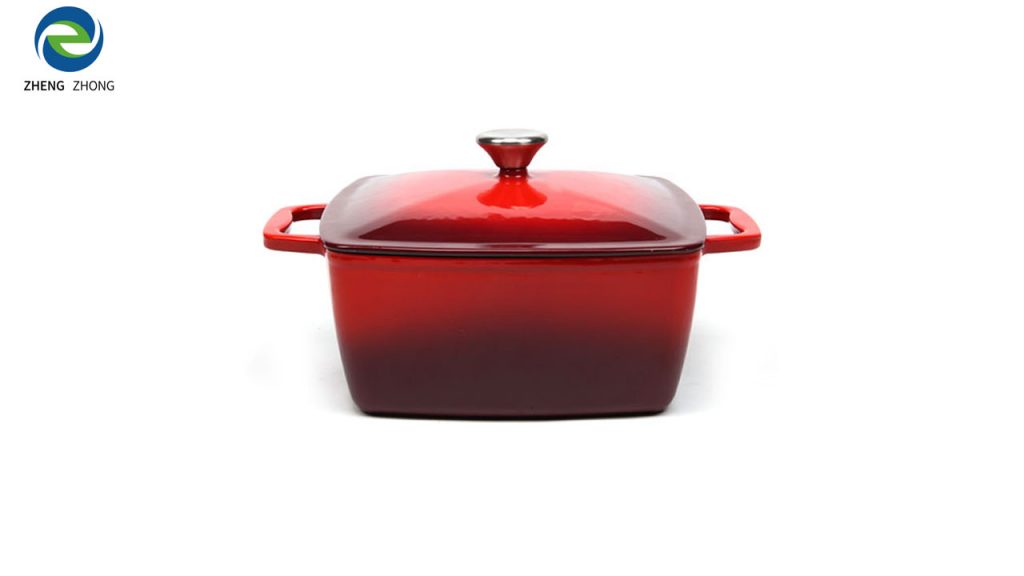
Elevate Your Culinary Creations with the Square Enameled Cast Iron Casserole
While traditional round Dutch ovens and oval roasters dominate most kitchen cabinets, the square enameled cast iron casserole offers a distinct geometric and functional advantage that transforms everyday home cooking and professional baking. By combining the massive thermal retention of heavy-duty cast iron with an efficient square footprint and a smooth, non-reactive porcelain-glass glaze, this specialized casserole maximizes cooking space, fits seamlessly into tight oven racks, and delivers stunning direct-to-table presentations.
1. The Geometric and Spatial Advantages of a Square Design
For culinary enthusiasts and home chefs who love to bake, roast, and layer dishes, the shape of your cookware fundamentally changes what you can prepare:
- Optimized Corner-to-Corner Surface Area: Unlike round pots that leave empty space when accommodating square or rectangular foods, a square casserole accommodates layered dishes like lasagnas, gratins, brownies, and sheet-pan roasts with absolute precision.
- Efficient Oven and Shelf Nesting: Square profiles fit flush against oven walls and slide neatly into compact cabinet corners or drawer organizers, making them exceptionally space-efficient for modern kitchens.
- The Thermal Battery Effect: Forged from high-density iron-carbon alloy, the square casserole absorbs, retains, and steadily radiates thermal energy from all sides, eliminating hot spots and ensuring even, predictable cooking temperatures.
2. Why Enamel Coating Elevates the Square Casserole Experience
While raw cast iron requires meticulous seasoning and rust prevention, an enameled finish introduces modern hygiene and convenience:
- Zero Seasoning Required: The permanent porcelain-glass glaze completely seals the porous iron underneath, allowing you to skip oil seasoning entirely and start cooking right away.
- 100% Acid-Safe Cooking: The inert glass surface allows you to simmer heavy tomato sauces, wine-based braises, and citrus marinades without metallic leaching or surface corrosion.
- Fuss-Free Cleanup: Food residue and baked-on cheese lift off smoothly with warm water and mild dish soap, keeping post-dinner maintenance fast and straightforward.
Data Table: Square Casserole vs. Alternative Baking and Cooking Vessels
| Feature / Metric | Square Enameled Cast Iron Casserole | Traditional Round Dutch Oven | Rectangular Glass Baking Dish |
|---|---|---|---|
| Baking Geometry | Optimal (Fits square/rectangular foods perfectly) | Limited (Leaves empty side gaps) | Optimal (Fits rectangular foods) |
| Thermal Heat Retention | Exceptional (Dense iron-carbon core) | Exceptional (Dense iron-carbon core) | Low to Moderate (Prone to rapid cooling) |
| Direct Stovetop Use | Universal (Gas, induction, electric, oven safe) | Universal (Gas, induction, electric, oven safe) | Restricted (Oven only; cracks on direct flame) |
| Table Presentation Appeal | Stunning (Vibrant enamel color gradients) | Classic (Traditional heritage shape) | Utilitarian (Clear glass utility dish) |
Frequently Asked Questions (FAQ)
What are the main benefits of a square enameled cast iron casserole?
The square design provides optimized interior space for square or rectangular foods (like lasagna and baked gratins), maximizes oven shelf space, and pairs the geometric layout with the exceptional heat retention of cast iron.
Does an enameled square casserole require oil seasoning?
No. The casserole features a smooth, vitreous porcelain-glass glaze that permanently seals the iron underneath. Zero oil seasoning is required or recommended.
Can a square cast iron casserole be used on an induction cooktop?
Yes, absolutely. Because the core is forged from ferrous cast iron, the flat bottom makes efficient magnetic contact with induction cooktops, as well as gas, electric, and ceramic glass burners.
How do I clean baked-on cheese or food from the corners of the square pot?
Allow the casserole to cool completely, then fill it with warm water and a tablespoon of baking soda to soak and loosen stubborn residue. Wash gently using a soft sponge and mild dish soap, avoiding abrasive steel wool pads.