
Cast Iron vs. Enameled Cast Iron: Which Cookware Is Better?
When choosing heavy-duty cookware for home, commercial, or wholesale supply, few debates generate as much passion as traditional bare cast iron versus enameled cast iron. Both vessel types trace their heritage to the same high-density iron metallurgy, yet they behave entirely differently when subjected to high heat, acidic ingredients, and daily dishwashing.
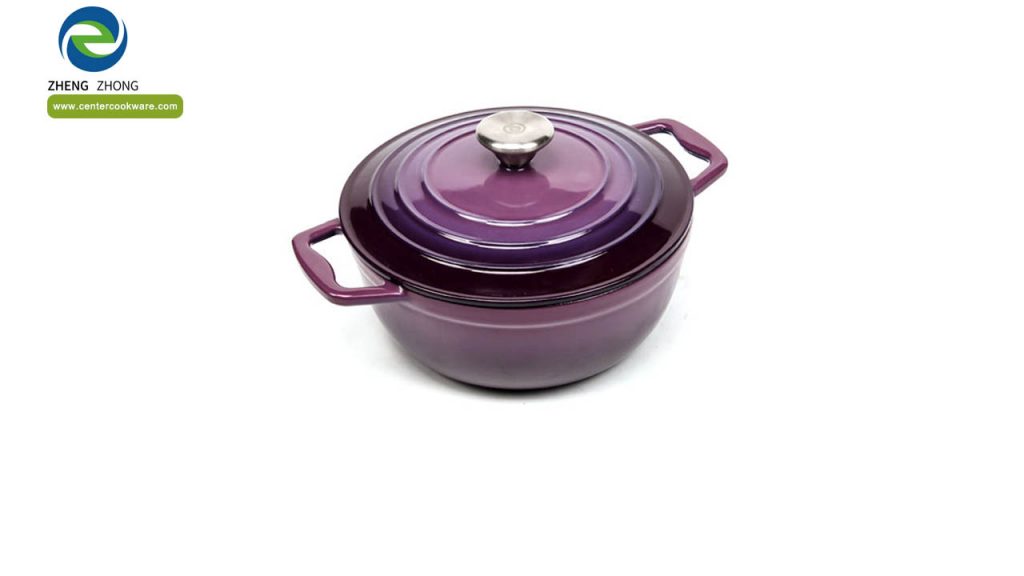
Understanding the structural, functional, and operational trade-offs between bare and enameled cookware enables chefs, buyers, and brand partners to select the right tool for specific culinary tasks. At Shijiazhuang Zhengzhong Technology Co., Ltd. (Center Enamel), we have engineered and manufactured elite enameled cast iron cookware since 1989. Combining over three decades of industrial leadership, advanced automated machine-casting, and proprietary in-house enamel frits, we supply premium kitchenware partners across more than 50 countries.
1. What Is Traditional Bare Cast Iron Cookware?
Traditional bare cast iron is forged by pouring molten iron-carbon alloy directly into sand molds. The resulting cookware is solid, heavy metal with an exposed, slightly porous surface.
- The Seasoning Requirement: To prevent rapid rust and create a non-stick cooking layer, bare cast iron must undergo "seasoning"—a process where cooking oils are heated past their smoke point to polymerize into a hard carbon matrix.
- Thermal Mass Power: Like all cast iron, bare cookware absorbs and holds incredible amounts of heat, making it an exceptional choice for intense steak searing and outdoor campfire cooking.
- Sensitivity to Acids and Water: Raw iron oxidizes quickly when exposed to moisture and reacts chemically with acidic ingredients like tomato sauce, citrus, or wine, which strip the seasoning layer and leach metallic tastes into food.
2. What Is Enameled Cast Iron Cookware?
Enameled cast iron takes the exact same high-density iron core and coats it in an inorganic vitreous porcelain glass glaze (enamel frits) fused at extreme temperatures between 740°C and 790°C inside specialized industrial kilns.
- Zero Seasoning Needed: The permanent porcelain glass barrier encapsulates the iron entirely, providing an instant, smooth release surface right out of the box with zero oil curing required.
- 100% Acid-Safe & Non-Reactive: Because the interior surface is essentially medical-grade glass, it remains totally inert across the pH scale. You can simmer tomato sauces, wine reductions, and lemon glazes for hours without metal interaction.
- Complete Rust Protection: The impermeable glaze prevents moisture from contacting the iron core, completely eliminating rust risks and enabling effortless cleaning with soap and water.
- Vibrant Aesthetic Options: Exterior enamel glazes can be produced in brilliant, fade-resistant color gradients that transition beautifully from stovetop to dining room service.
3. Head-to-Head Comparison: Which Is Better?
Determining which cookware is "better" depends on your intended culinary application:
Searing and High-Heat Charring: Tie
Both bare and enameled cast iron possess identical heavy iron cores, giving them equal heat retention capacity. While bare cast iron tolerates aggressive open flames and metal spatulas slightly better, dark/matte enameled cast iron delivers equal sear depth without the maintenance hassle.
Acidic Cooking & Versatility: Enameled Cast Iron Wins
Enameled cast iron allows long, low-temperature simmers of tomato-based stews, braises, and chili without degrading the vessel surface or imparting a metallic taste. Bare cast iron struggles with prolonged acidic recipes.
Maintenance & Ease of Use: Enameled Cast Iron Wins
Bare cast iron requires ongoing seasoning maintenance, careful hand-drying, and immediate oiling to stop rust. Enameled cast iron cleans effortlessly with standard dish soap and water without risk of oxidation.
Rugged Durability & Outdoor Use: Bare Cast Iron Wins
On open-fire campfires, grills, or rough outdoor surfaces, bare iron is virtually indestructible. Porcelain enamel can chip if struck hard with heavy tools or subjected to extreme, unbuffered thermal shocks.
Industrial Manufacturing Excellence at Center Enamel
To deliver world-class enameled cast iron that outlasts standard market alternatives, Center Enamel employs strict industrial manufacturing controls:
- >90% Automated Machine-Casting: Moving away from manual sand pouring, Center Enamel uses automated casting equipment to eliminate interior voids, ensure uniform wall density, and guarantee absolute zero base warpage on flat cooktops.
- Proprietary In-House Enamel Frits: Rather than relying on generic glazes, Center Enamel independently formulates high-performance porcelain enamel frits—trusted by major appliance groups like Midea—to deliver superior thermal shock resistance and chip prevention.
- Certified Non-Toxicity Compliance: Operating under ISO9001-2015, BSCI, and Facility Security, every batch complies with strict global food-contact safety standards, including LFGB (Europe), DGCCRF (France), and California Proposition 65 (USA).
Data Table: Bare Cast Iron vs. Center Enamel Enameled Cast Iron
| Performance & Quality Metric | Traditional Bare Cast Iron | Center Enamel Enameled Cast Iron |
| Surface Finish | Exposed iron-carbon alloy | Vitreous porcelain glass glaze |
| Factory Seasoning | Requires ongoing oil polymer maintenance | Zero seasoning required (Ready-to-use) |
| Acidic Food Safety | Poor (Acids strip seasoning & leach iron) | 100% Non-reactive & acid-safe |
| Rust Protection | Vulnerable if un-oiled or damp | 100% Rust-proof glass barrier |
| Casting Technology | Often manual sand molds (variable thickness) | >90% Automated machine-casting |
| Global Safety Testing | Basic / Standard metallurgical check | LFGB, DGCCRF, California Prop 65 Certified |
Frequently Asked Questions (FAQ)
Is enameled cast iron as durable as bare cast iron?
Yes. The structural iron core of enameled cast iron is just as strong as raw cast iron. While the porcelain glass coating requires protection from heavy physical impacts to prevent chipping, high-quality enameled cookware lasts for decades under normal kitchen use.
Does enameled cast iron require oil seasoning before use?
No. The interior cooking surface is permanently sealed with a non-porous glass glaze during high-temperature kiln firing. Zero oil seasoning is required or recommended.
Can you wash enameled cast iron with soap?
Yes, absolutely. Unlike bare cast iron, where dish soap can strip away built-up oil seasoning, enameled cast iron features a glass surface that can be washed freely with mild soap and hot water.
What safety certifications do Center Enamel products carry?
All cookware manufactured by Center Enamel satisfies major global food-contact safety standards, including LFGB (Europe), DGCCRF (France), and California Proposition 65 (USA), backed by ISO 9001:2015 and BSCI factory credentials.