
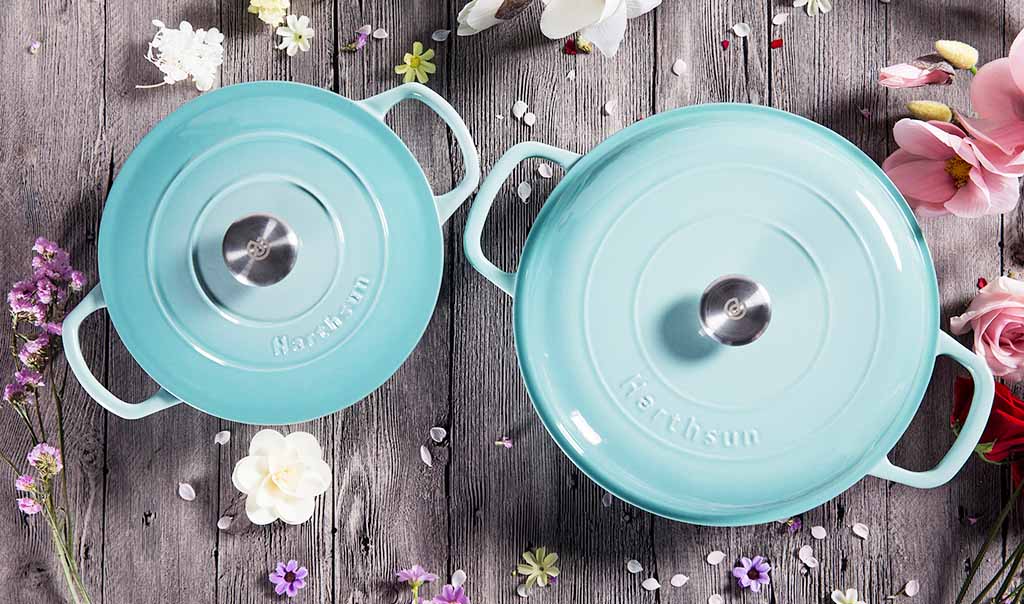
Cast Iron Dutch Oven: Braised, Stewed, Roasted, and Boiled—All Done in One Pot
A cast iron Dutch oven is the ultimate multi-tasking kitchen workhorse capable of mastering four fundamental culinary techniques: braising, stewing, roasting, and boiling. Powered by a heavy iron-carbon core that acts as a thermal battery and a tight-fitting, self-basting lid, it eliminates the need for specialized pans by handling everything from liquid-heavy stocks to oven-crisped artisan bread and roasted meats in a single vessel.
1. The Core Four: Mastering Every Culinary Technique in One Pot
Instead of cluttering your kitchen cabinets with separate specialized pans, a single cast iron Dutch oven transitions effortlessly across four major cooking methods:
- 1. Braising (Low and Slow): The Dutch oven is legendary for braising. By searing meat on the stovetop and then adding wine or stock before transferring it to a low oven, the heavy lid seals in steam while condensation bumps continuously baste the food, yielding melt-in-your-mouth short ribs and pot roasts.
- 2. Stewing (Even Simmering): Whether making a hearty beef stew or a vibrant vegetable curry, the pot's dense walls distribute heat uniformly across the base and sides. This prevents scorching during long, gentle simmers and helps reduce sauces to rich perfection.
- 3. Roasting (Crispy Crusts & Bread Baking): When used uncovered or with the lid on in a scorching-hot oven, the Dutch oven acts as a mini brick oven. It traps steam during the first phase of bread baking to create a crackly crust, and delivers beautifully roasted chickens with crisp skin and juicy interior meat.
- 4. Boiling (Soups, Stocks, and Pasta): Thanks to its high-density iron core, a Dutch oven brings large volumes of water to a rolling boil and holds that steady heat efficiently, making it ideal for homemade broths, corn chowders, and pasta boils.
2. Why One Pot Can Do It All: The Engineering Secret
The secret behind the Dutch oven's unmatched all-in-one capability lies in its material science and design structure:
- The Thermal Battery Effect: Once heated, heavy cast iron holds onto thermal energy tenaciously. It doesn't lose heat when cold ingredients are added, ensuring steady, reliable cooking performance across all four techniques.
- Stovetop-to-Oven Fluidity: Containing no synthetic parts or melting components, the pot moves seamlessly from gas, electric, or induction burners directly into high-temperature ovens or broilers.
- Inert Porcelain Glaze: Modern enameled Dutch ovens feature a non-porous glass glaze that prevents chemical reactions with acidic ingredients like tomatoes and wine, ensuring pure flavors whether you are boiling soup or braising acidic reductions.
Dutch Oven Multi-Tasking Performance Matrix
| Cooking Technique | Primary Dutch Oven Action | Key Benefit Provided by the Pot |
| Braising | Sear on stove, cover with lid, slow-bake in oven | Self-basting condensation lid keeps meats fork-tender. |
| Stewing | Continuous low-heat simmering | Uniform heat distribution prevents scorching at the base. |
| Roasting | High-heat oven baking (with or without lid) | Traps steam for bread crusts and locks in meat juices. |
| Boiling | Rapid heating of liquids, stocks, and water | Exceptional thermal mass maintains rolling boils efficiently. |
Frequently Asked Questions (FAQ)
Can a cast iron Dutch oven really replace multiple pots and pans?
Yes. Because it handles high-heat searing, long braises, oven roasting, and liquid boiling with equal proficiency, a single Dutch oven can easily replace a stockpot, roasting pan, and heavy skillet in daily meal preparation.
Do I need to season an enameled cast iron Dutch oven?
No. Enameled Dutch ovens feature a smooth, non-porous porcelain-glass glaze that completely seals the iron underneath. Zero oil seasoning is required or recommended.
Can I bake bread in a cast iron Dutch oven?
Yes, absolutely. Baking bread inside a preheated covered Dutch oven is one of the most popular uses for the pot, as it traps the dough's natural moisture to create a professional bakery-style crust.
How do I clean my Dutch oven after boiling or roasting?
Let the pot cool down completely, then fill it with warm water and a tablespoon of baking soda to loosen any food residue. Wash gently with a soft sponge and mild dish soap. Avoid harsh steel wool pads to protect the exterior glaze.