
Cast Iron Cookware: The Ultimate Guide to Stockpots and Pans
When outfitting a commercial kitchen or upgrading a home culinary collection, choosing the right cookware pieces is vital. Among all kitchen essentials, cast iron stockpots and pans stand out for their unmatched thermal dynamics, structural heft, and versatile applications. From slow-simmering large-batch stocks to searing cuts of meat at high temperatures, these vessels represent the pinnacle of culinary performance.
At Shijiazhuang Zhengzhong Technology Co., Ltd. (Center Enamel), we have engineered and manufactured elite enameled cast iron cookware since 1989. With more than 30 years of specialized industrial heritage, we combine advanced automated foundry techniques with proprietary enamel chemistry to supply top-tier kitchenware partners across more than 50 countries.
1. The Anatomy of Cast Iron Stockpots and Pans
Why do professional chefs and passionate home cooks rely heavily on cast iron stockpots and frying pans? The answer lies in the physics of thermal engineering:
- Massive Thermal Retention: The dense iron-carbon alloy absorbs and holds massive amounts of heat. When ingredients are introduced, the heavy body resists temperature crashes, securing smooth simmers and deep sears.
- Uniform Heat Distribution: Thick walls and precision-machined bases eliminate hot spots, ensuring that soups, broths, stews, and pan-fried dishes cook evenly across every square inch.
- Multi-Surface Compatibility: Modern cast iron transitions effortlessly across gas burners, electric coils, ceramic glass, ovens, and induction cooktops.
2. Stockpots vs. Pans: Specialized Roles in the Kitchen
Understanding the distinct functions of stockpots and pans helps optimize kitchen efficiency:
- Cast Iron Stockpots / Dutch Ovens: Designed for large-batch cooking, soups, braises, broths, and artisan bread baking. They feature deep walls, tight-fitting lids that cycle moisture back into the food, and sturdy looped handles for safe transport from stove to oven.
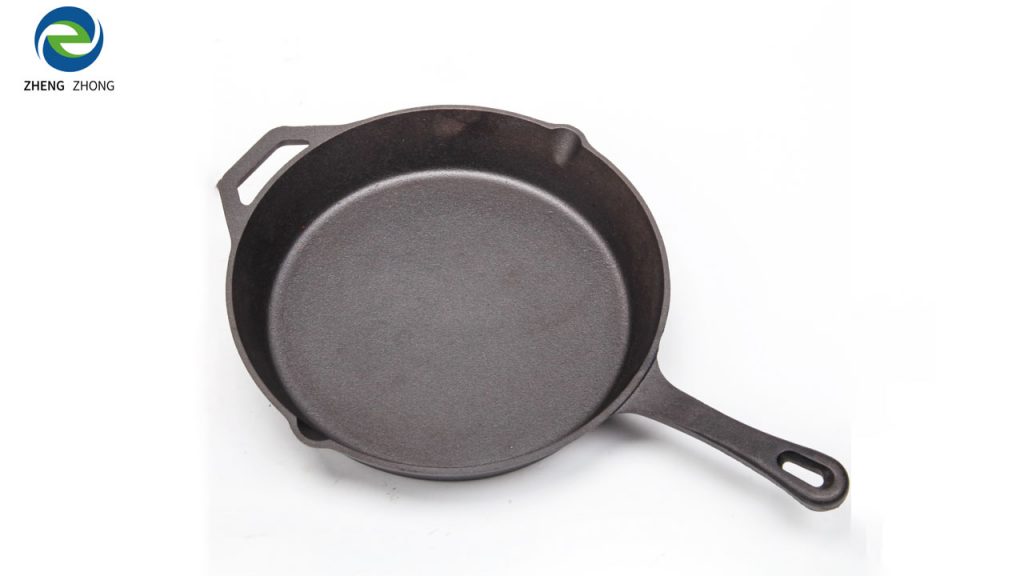
- Cast Iron Skillets and Pans: Engineered for high-heat searing, frying, sautéing, and baking. Their wide, shallow profiles and sloped sides facilitate easy food flipping, pan sauces, and exceptional caramelization.
3. Industrial Manufacturing Excellence at Center Enamel
Producing world-class stockpots and pans requires strict precision across metallurgy, mold engineering, and chemical coating:
- >90% Automated Machine-Casting: Moving away from unpredictable manual sand pouring, Center Enamel utilizes advanced machine-casting blanks. This automated process ensures structural metal tightness, absolute zero warpage across wide flat bases, and uniform wall thickness.
- Proprietary In-House Enamel Frits: Rather than relying on generic outsourced chemical glazes, Center Enamel independently develops and produces its own high-performance porcelain enamel frits. This proprietary R&D yields superior thermal shock resistance and brilliant color stability—earning us the trust of major industrial partners like Midea, China's largest small home appliance group.
- Rigorous Global Compliance: Certified under ISO9001-2015, BCSI, and Facility Security, our manufacturing protocols satisfy the strictest international food-contact safety regulations, including LFGB (Europe), DGCCRF (France), and California Proposition 65 (USA).
Data Table: Cast Iron Stockpots vs. Frying Pans
| Evaluation Parameter | Center Enamel Cast Iron Stockpots | Center Enamel Cast Iron Pans / Skillets | Standard Thin Aluminum Cookware |
| Primary Culinary Use | Soups, stews, braises, stock, batch cooking | Searing, frying, baking, sautéing | Quick boiling, light heating |
| Thermal Mass | Exceptionally High (Maintains stable long-term heat) | High (Retains high searing temperatures) | Low |
| Seasoning / Glaze | Vitreous Glass Glaze (Zero seasoning required) | Vitreous Glass Glaze (Zero seasoning required) | Synthetic non-stick or bare metal |
| Acidic Food Safety | Complete (Inert glass barrier prevents leaching) | Complete (Inert glass barrier prevents leaching) | Varies by coating quality |
| Expected Lifespan | Multi-Generational | Multi-Generational | 1 to 3 Years |
Frequently Asked Questions (FAQ)
What makes cast iron stockpots better than standard stainless steel stockpots?
Cast iron stockpots offer far superior heat retention. While stainless steel heats up quickly, cast iron stores and steadily radiates thermal energy throughout the liquid, ensuring a uniform, gentle simmer for hours without scorching.
Do enameled cast iron stockpots and pans require oil seasoning?
No. Enameled cast iron is fused with a smooth porcelain-glass glaze that seals the iron entirely, providing a zero-maintenance, ready-to-use surface right out of the box.
Are Center Enamel stockpots and pans compatible with induction cooktops?
Yes, absolutely. Because the structural core is forged from ferrous cast iron, the flat, precision-machined bases make efficient magnetic contact with induction hobs, gas burners, and electric ranges.
What international safety standards do Center Enamel collections satisfy?
All cookware manufactured by Center Enamel meets or exceeds major global food-contact safety regulations, including LFGB (Europe), DGCCRF (France), and California Proposition 65 (USA), backed by ISO 9001:2015 and BSCI factory credentials.