
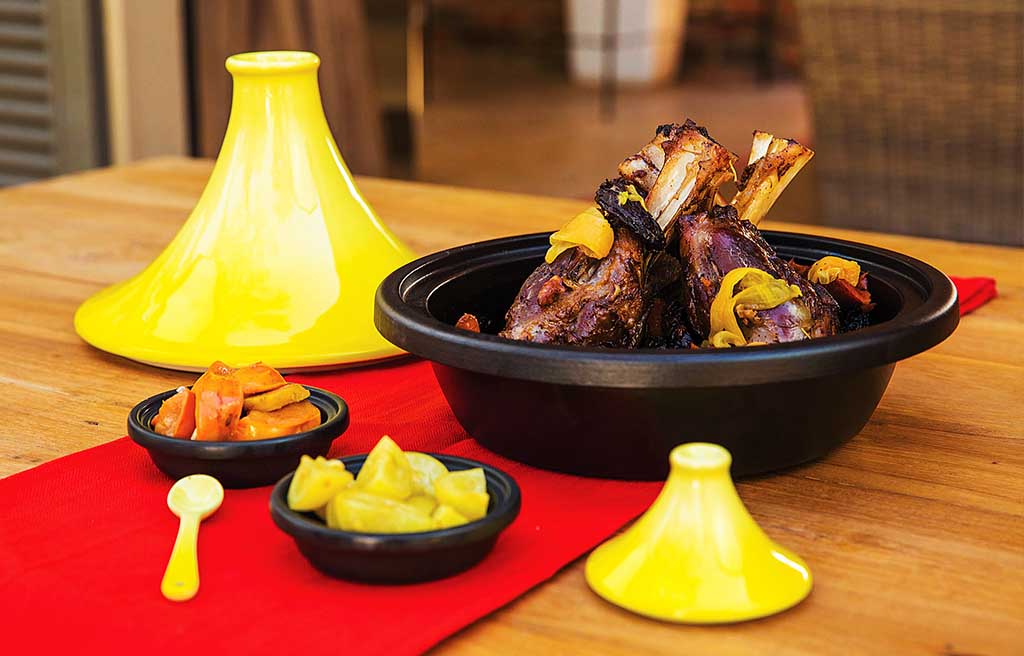
Beautiful and Traditional Enamel Cast Iron Moroccan Tagine: The Ultimate Cooking & Heritage Guide
An enamel cast iron Moroccan tagine merges centuries-old North African culinary design with modern metallurgical performance. Featuring a heavy-duty cast iron base that provides steady, uniform heat distribution and a distinctive conical lid that continuously recycles steam back onto the ingredients, it is sealed inside a non-reactive porcelain-glass glaze. This eliminates the cracking risks and seasoning upkeep of traditional clay tagines while delivering tender, slow-simmered stews with stunning direct-to-table aesthetics.
1. The Ingenious Design of the Traditional Tagine
The tagine is more than just a piece of cookware—it is a specialized thermodynamic system engineered for arid environments where water preservation is paramount:
- The Conical Lid: As ingredients simmer, steam rises into the narrow apex of the cone, cools down, and condenses against the walls, constantly trickling moisture back down onto the meat and vegetables.
- Self-Basting Circulation: This continuous cycle allows tough cuts of meat (like lamb, chicken, or root vegetables) to break down into melt-in-your-mouth tenderness using minimal added liquid.
2. Why Enamel Cast Iron Upgrades Traditional Tagine Cooking
While authentic tagines were historically crafted from porous clay, modern enamel cast iron tagines offer massive upgrades for home kitchens:
- Stovetop and Oven Versatility: Unlike delicate earthenware tagines that cannot handle direct gas flames or modern induction cooktops without a heat diffuser, an enameled cast iron base can sear meats directly on any stovetop before transitioning into the oven.
- Superior Heat Retention: The dense iron-carbon core absorbs and holds heat far longer than clay, ensuring even simmering and keeping meals warm at the dining table for hours.
- Zero Seasoning & Acid-Safe Glaze: The smooth porcelain-glass coating prevents moisture absorption and rust, making it 100% safe for acidic ingredients like tomatoes, lemons, and wine-based marinades without altering the food's flavor.
Tagine & Stew Vessel Comparison
| Performance Feature | Enamel Cast Iron Tagine | Traditional Earthenware Clay Tagine | Standard Enameled Dutch Oven |
| Stovetop Compatibility | Universal (Gas, electric, induction) | Limited (Requires diffuser; prone to cracking) | Universal (Gas, electric, induction) |
| Moisture Recycling | Exceptional (Conical steam-condensation lid) | Exceptional (Conical steam-condensation lid) | Moderate (Flat or domed self-basting lid) |
| Durability & Strength | Heirloom Grade (Virtually unbreakable core) | Fragile (Cracks easily from thermal shock) | Heirloom Grade (Virtually unbreakable core) |
| Table Presentation | Stunning (Vibrant color gradients & heritage shape) | Rustic (Authentic clay look, delicate surface) | Classic (Traditional round or oval silhouette) |
Frequently Asked Questions (FAQ)
Do I need to season an enamel cast iron Moroccan tagine?
No. Unlike raw cast iron or unglazed clay tagines, enameled tagines feature a non-porous porcelain-glass glaze that requires zero oil seasoning. You can wash it with mild soap and water and begin cooking immediately.
Can an enamel cast iron tagine be used on induction cooktops?
Yes. Because the base of the tagine is made of high-density ferrous cast iron, it is completely magnetic and works efficiently on induction cooktops, as well as gas, electric, and glass-ceramic burners.
Why is the lid shaped like a cone?
The conical shape is the secret to tagine cooking. It acts as a natural condensation engine: rising steam hits the cooler upper walls of the cone, condenses into liquid, and continuously drips back down onto the food, keeping meats exceptionally tender without needing extra water.
How do I clean and maintain my enameled tagine?
Let the tagine cool completely after cooking, then wash it by hand using warm water, a soft sponge, and mild dish soap. Avoid abrasive scouring pads, steel wool, or harsh dishwasher cycles to protect the glossy exterior finish.