
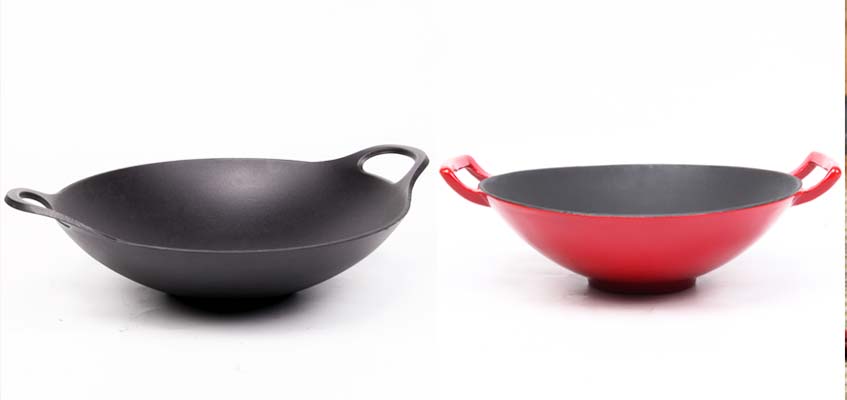
A Good Wok That Understands Temperature: Why a Cast Iron Wok Masters Thermal Dynamics
A cast iron wok is widely celebrated as cookware that truly "understands temperature" because its dense iron-carbon core acts as a robust thermal battery. Unlike thin pans that lose heat instantly when cold food is added, a cast iron wok absorbs, retains, and steadily radiates heat. This exceptional thermal memory prevents dramatic temperature crashes, ensuring your ingredients sear, crisp, or simmer at precisely the right heat level.
1. The Physics of Temperature: Why Cast Iron Excels
In the kitchen, temperature control is everything. Here is how a cast iron wok interacts with heat differently than standard cookware:
- The Thermal Battery Effect: Cast iron is heavy and dense. While it takes slightly longer to preheat than thin aluminum, once it reaches your target temperature, it holds onto that heat tenaciously.
- Resisting Temperature Drops: When you drop a pound of cold vegetables or raw meat into a standard pan, the surface temperature plummets, causing food to steam rather than sear. A cast iron wok’s massive thermal mass resists this drop, maintaining steady cooking energy.
- Balanced Radiant Heat: A quality cast iron wok distributes heat uniformly up its sloping walls, creating distinct thermal zones—a blazing hot bottom for searing and slightly cooler upper walls for resting or slow-cooking.
2. How to Master Temperature Control with Your Cast Iron Wok
Because cast iron holds onto heat so efficiently, working with it requires a slightly different approach than cooking with thin steel or non-stick pans:
- Patience in Preheating: Give your cast iron wok 5 to 8 minutes to preheat gradually over medium-low to medium heat. This ensures the heat disperses evenly across the entire bowl before any oil or food touches the surface.
- Lower Your Flame Settings: Because cast iron retains heat so well, you rarely need to blast it on maximum burner settings once cooking begins. Keeping your burner at medium or medium-high is usually more than enough to maintain a vigorous sizzle.
- Letting the Wok "Speak" to You: Listen to the sizzle. A sharp, consistent crackle indicates optimal heat, while a quiet bubble means your wok is losing energy and needs a slight heat adjustment.
Wok Materials and Temperature Behavior
| Wok Material | Heat Up Time | Heat Retention | Temperature Stability (When Food is Added) | Best Cooking Technique |
| Cast Iron Wok | Moderate to Slow | Exceptional | High (Resists temperature drops) | Slow-simmering, deep-frying, deep searing, and even heat retention |
| Carbon Steel Wok | Fast | Low to Moderate | Moderate (Cool down quickly when adjusted) | Rapid high-heat tossing and quick-flips |
| Standard Non-Stick Wok | Very Fast | Low | Poor (Prone to sudden hot/cold spots) | Low-oil cooking, delicate ingredients (eggs, soft fish) |
Frequently Asked Questions (FAQ)
Why do people say a cast iron wok "understands temperature"?
The phrase refers to cast iron's superior thermal mass and heat memory. It doesn't overreact to sudden changes; instead, it stores heat efficiently and releases it at a steady, predictable rate, preventing the wild temperature fluctuations common in thin metal pans.
Does a cast iron wok take too long to heat up?
It does require a slightly longer preheating phase (around 5 to 8 minutes) compared to lightweight aluminum pans. However, this upfront patience pays off because once it is hot, it maintains its temperature effortlessly.
Can a cast iron wok be used on modern induction cooktops?
Yes. Modern flat-bottomed cast iron woks are fully magnetic, making them exceptionally compatible with induction cooktops. The induction burner heats the flat base efficiently, while the sloped cast iron walls carry that thermal energy upward.
How do I prevent food from burning if cast iron holds so much heat?
Because cast iron retains heat intensely, a common mistake is keeping the stove on high the entire time. Once your wok is preheated, turn your burner down to medium or low; the wok will maintain the cooking temperature on its own without scorching your food.